 Spare Spoons Kitchen
Corzetti with Pine Nut & Marjoram Sauce
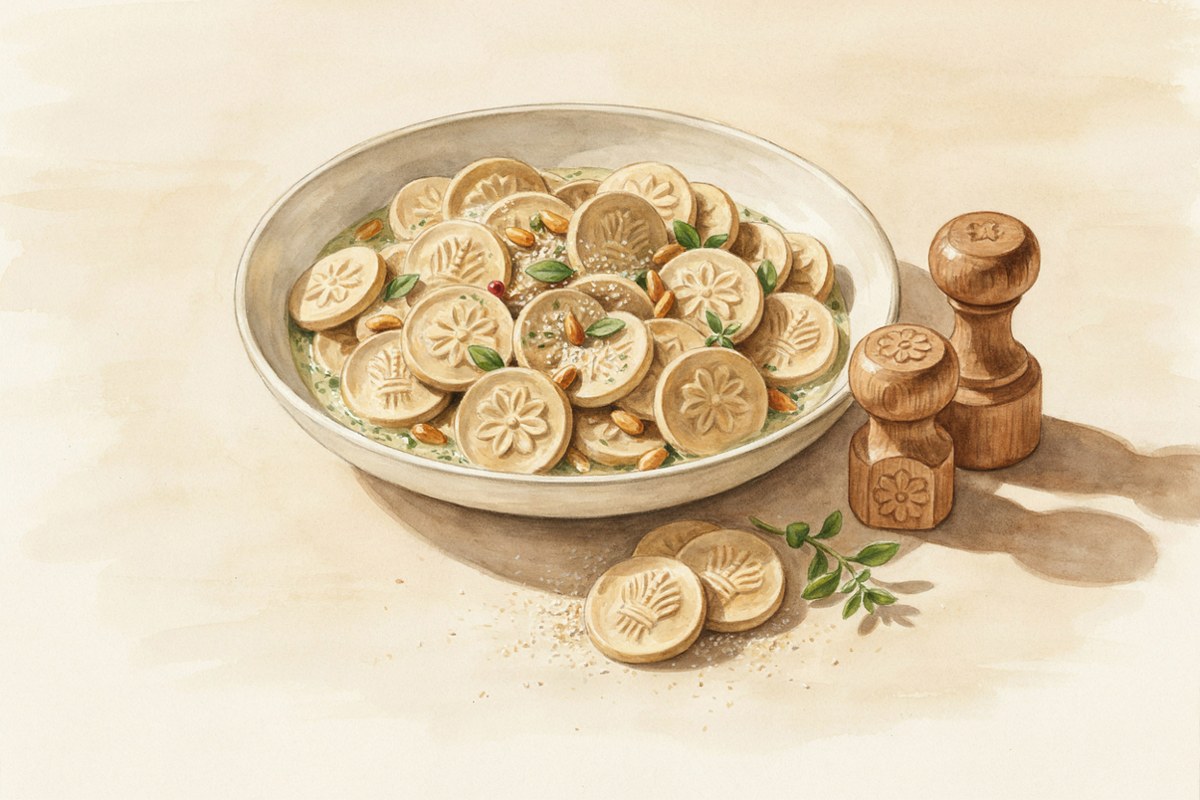
Thin coins of fresh pasta pressed between the two faces of a carved wooden stamp, so each one carries a pattern on both sides. The dough is lean and firm, so the pattern stays crisp in the pot. The sauce is the Ligurian one: pine nuts, marjoram, garlic and Parmigiano blitzed with olive oil and a splash of cream, tossed raw with the hot pasta.
Ingredients
Before you start
Get these into the state the recipe asks for first — the steps that use them won't wait.
- Have a tray dusted with semolina ready before you start stamping — The coins need somewhere to go one at a time, spread out. Stacked or crowded, they stick together and the patterns flatten.
Method
Cook's notes
Provenance: corzetti (also croxetti) come from Liguria, where families once carved their crest into the stamp. The dough and sauce here follow Enza's corzetti on Pasta Grannies — one egg and water for the dough, and a raw pine nut and marjoram sauce with a splash of cream — scaled up and weighed.
Why weigh the liquid. In the video the dough starts at about 50% liquid and takes a lot of extra flour during kneading and rolling, which is how it gets firm enough to stamp. Weighing to the same 50% means egg size doesn't change the dough; work in a little flour while kneading or rolling only if it feels tacky. (Lower than 50%, the dough never comes together in the mixer.) It's the same trick as the house pasta dough, which is richer and softer — better for ribbons, wrong for a pattern.
What to do with the scraps. Round stamps cut from a strip of dough leave the corners between the circles, so expect about a quarter of the sheet as trimmings. Don't try to reroll them: the dusting semolina keeps them from sticking back together, and they crumble in the roller. Instead, while they're still soft, cut them with a knife into rough bite-size pieces, which Italians call maltagliati, "badly cut." They're made for soup: drop them into pasta e fagioli, minestrone or plain broth for the last 2–3 minutes. To keep them, freeze them in a single layer on a tray, then bag them; cook straight from frozen.
Keep the sauce raw. Never heat the sauce in a pan: the cheese turns stringy and the oil loses its flavor. The heat of the pasta and the pasta water are enough to warm it and turn it creamy. A loose sauce settles into the pattern and shows it off; a stiff one hides it.
The stamp. A corzetti stamp is two pieces of turned wood: a cutter on one end, and a pair of carved faces that press each coin on both sides. Most are 6–7 cm (about 2½ inches) across. Patterns range from wheat sheaves to family crests and monograms.
Where to get a stamp. Splurge: hand-carved stamps from Filippo Romagnoli of Romagnoli Pasta Tools, a family workshop near Florence (sold on Etsy — search his shop name; about €99, and he makes only a handful a day), or from Terry Mirri's Artisanal Pasta Tools in Sonoma, California, made to order in your choice of wood and design. Everyday: a machine-made beechwood stamp such as Marcato's Corzetto, or the lily stamp at Bernal Cutlery (about $35). Look for one with its own cutter end, about 5.5–7 cm across. Never wash a wooden stamp in water — brush out the flour and wipe it with a dry towel.
If the stamp sticks, the sheet is too damp. Give it a few more minutes uncovered and dust the stamp again. If the coins crack at the edges when you press them, the sheet has dried too long — cover the rest and work faster.
Brown-butter version. The other classic: melt about 20 g of butter per serving with the toasted pine nuts until it smells nutty, stir in the marjoram off the heat, and toss the corzetti in the pan with a splash of pasta water and Parmigiano. Simpler, and the pattern shows even more clearly.
Make ahead. Let the stamped coins air-dry on the tray for an hour, then refrigerate them uncovered for up to a day. To freeze, freeze them in a single layer on the tray until hard, then bag them; cook straight from frozen, adding a minute or two. The sauce keeps, covered, in the fridge for a day; let it come to room temperature first.
Other ways to sauce them. Walnut sauce (salsa di noci) is the other Ligurian pesto-style sauce, and pesto is a natural fit, loosened with pasta water.
Easier, if you like
- No stamp? Cut rounds with a 6–7 cm (2½-inch) biscuit cutter or a small glass and skip the pressing. You lose the pattern but keep the shape.
- No stand mixer? Make a flour well on the counter, pour the wet into the middle, pull the flour in with a fork, then knead by hand about 10 minutes. This firm dough takes some effort by hand; the rest makes the difference.
- No food processor? Pound the garlic, pine nuts and marjoram in a mortar, the traditional way, then stir in the cheese, oil and cream.
Notes on herbs, nuts, vegan and gluten-free
No marjoram: use fresh oregano, but about half as much — it's stronger. Fresh thyme works too.
Nut-free: skip the pine nuts and use the brown-butter version in the notes with toasted breadcrumbs (see the pangrattato) for crunch.
Dairy-free sauce: leave out the cream and cheese, add a little more oil and pasta water, and season with salt.
Vegan: this is an egg dough, so there's no simple swap.
Gluten-free: not recommended. Gluten-free dough doesn't hold a stamped pattern well, and it tears in the roller at this thickness.