 Spare Spoons Kitchen
Pangrattato
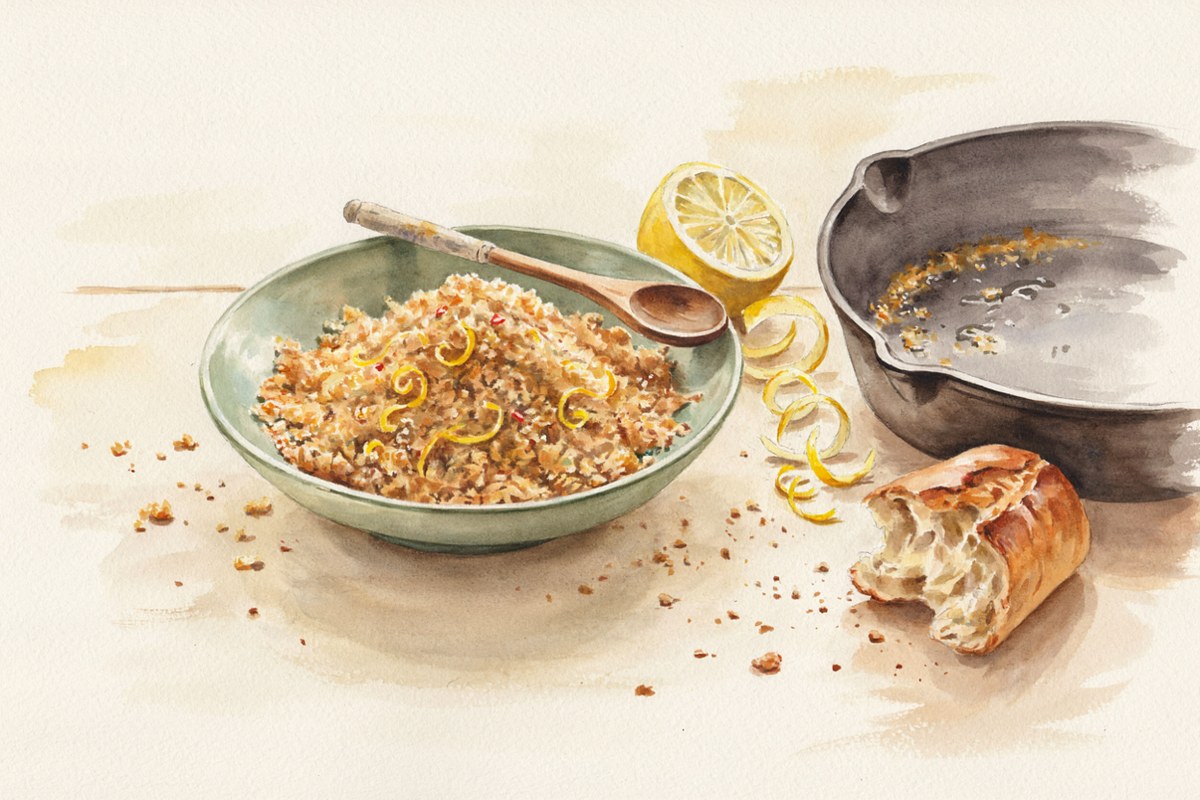
Breadcrumbs toasted golden in olive oil, with a clove of garlic, a pinch of chili and some lemon zest if you like. Southern Italian cooks call it poor man's Parmesan and scatter it over pasta where cheese would be too heavy. It adds crunch and toastiness without covering anything up.

Ingredients
Before you start
Get these into the state the recipe asks for first — the steps that use them won't wait.
- A plate or sheet pan next to the stove — the crumbs have to come out of the pan as soon as they're golden, because the hot pan keeps browning them
- Lemon zested, if you're using it — it goes in once the crumbs are off the heat, and there's no time to zest while they toast
Method
Cook's notes
Poor man's Parmesan. In Sicily and Calabria, toasted crumbs went on pasta when cheese was too expensive, and they stayed because they're good. They add salt, crunch and a toasty flavor without the weight of cheese, which is why they suit light, fresh sauces like Twenty-Minute Cherry Tomato Pasta.
Why coarse crumbs? Crumbs torn from a real loaf are uneven, so some bits go crunchy and others stay a little chewy. Store-bought fine breadcrumbs are too uniform and powdery, and they soak up the oil and turn greasy.
Where else to use it: over charred broccolini, broccoli or garlicky spinach, on a bowl of soup or beans, over a salad in place of croutons, or on baked fish. Anywhere you'd want crunch.
Keeping it. Cooled completely and sealed in a jar at room temperature, it keeps for about a week. If it softens, a minute or two in a dry skillet crisps it up again. Zest only the portion you'll use that day, because the lemon fades.
Variations:
• With anchovy: melt a fillet or two into the oil before the crumbs go in, the classic Sicilian way. Skip this for pasta that already has anchovies.
• Herby: stir in chopped parsley or thyme with the zest.
• With a cousin: scatter it together with gremolata for crunch and brightness at once.
Easier, if you like
- Use panko instead of making crumbs. Tap 🥄 Simplify this recipe for the panko version. It skips the food processor and toasts in half the time. The texture is lighter and more even, but still very good.
Vegan as written; easy to make gluten-free
Gluten-free: use Ian's Gluten Free Original Panko (breadcrumb or gluten-free aisle) with the Simplify version, or pulse a stale gluten-free loaf into crumbs for the main one. Gluten-free crumbs brown faster, so watch them closely.