 Spare Spoons Kitchen
Gremolata
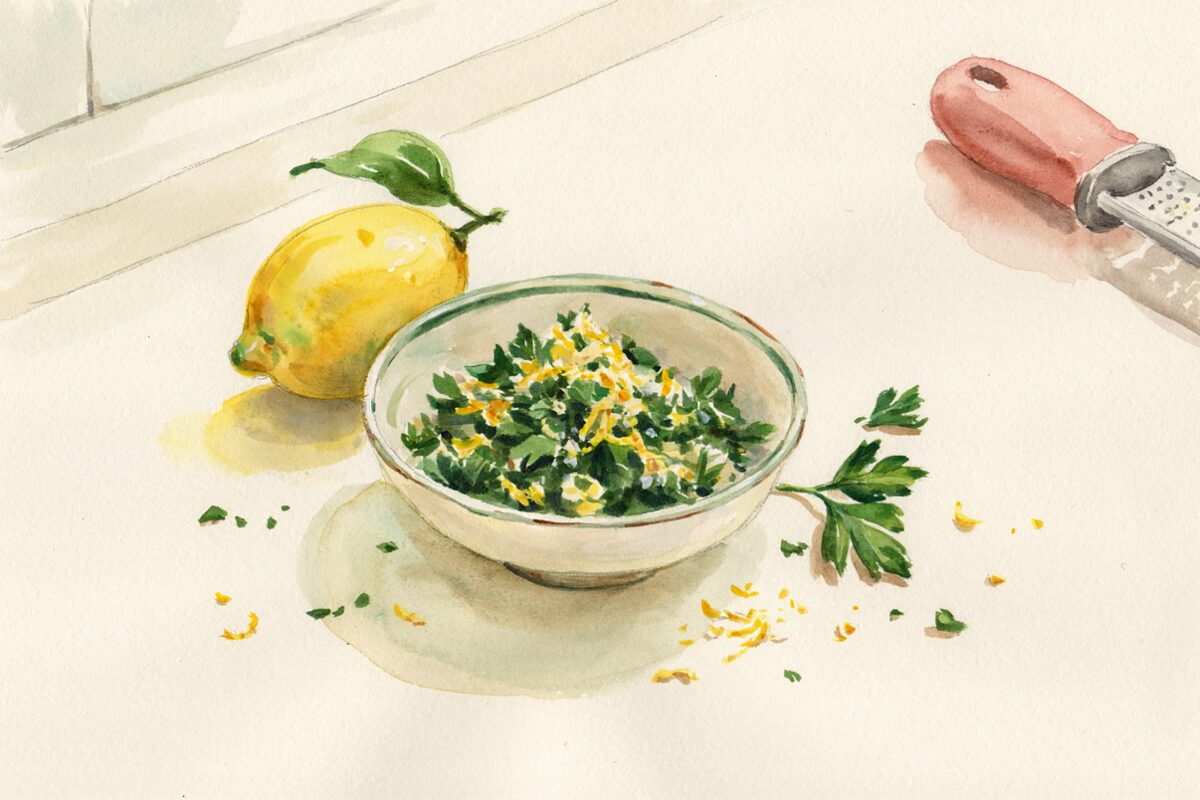
Lemon zest, garlic, and parsley, chopped fine — the two-minute Italian condiment that cuts through anything rich. Traditional on osso buco, at home on almost everything.

Ingredients
Method
Cook's notes
What gremolata does. It's a raw, bright hit of lemon, garlic, and parsley that cuts through rich, fatty, or long-cooked food and wakes everything up. Traditional on osso buco, but it belongs on far more than that.
Make it fresh. Raw garlic sharpens and lemon zest loses its perfume as they sit, so gremolata is at its best within an hour or two — chop it just before you need it.
Zest only the yellow. A microplane over just the colored skin gives you all the fragrant oils; dig into the white pith and it turns bitter.
Chop by hand. A food processor bruises the parsley and turns it to paste — a knife keeps it bright and distinct.
Where to put it: osso buco and other braises, seared scallops or fish, a grilled steak, roasted or grilled vegetables, beans, lentil soup, even garlic bread. Anywhere you'd reach for a squeeze of lemon, gremolata does more.
Variations:
• Mint gremolata — swap in (or add) fresh mint; lovely on lamb and peas.
• Orange gremolata — use orange zest instead of lemon; made for pork, duck, or roasted beets.
• Gremolata piccante — mince in an anchovy fillet and a pinch of red pepper flakes for a punchy, savory version.
• Loosen it into a sauce — stir in a few spoonfuls of olive oil and it edges toward salsa verde, spoonable over anything.
Easier, if you like
- Make a little extra and keep it covered in the fridge for up to a day — it dulls a touch but still brightens leftovers and eggs the next morning.
- No fresh parsley? The zest and garlic alone still do most of the work — a lemon-garlic hit over a rich dish is never wrong.
Naturally vegan, vegetarian, and gluten-free
Vegan / vegetarian / gluten-free: it's just herbs, zest, and garlic — naturally all three. (The gremolata piccante variation with anchovy is the only non-vegetarian option.)