 Spare Spoons Kitchen
Veal Osso Buco
alla Milanese
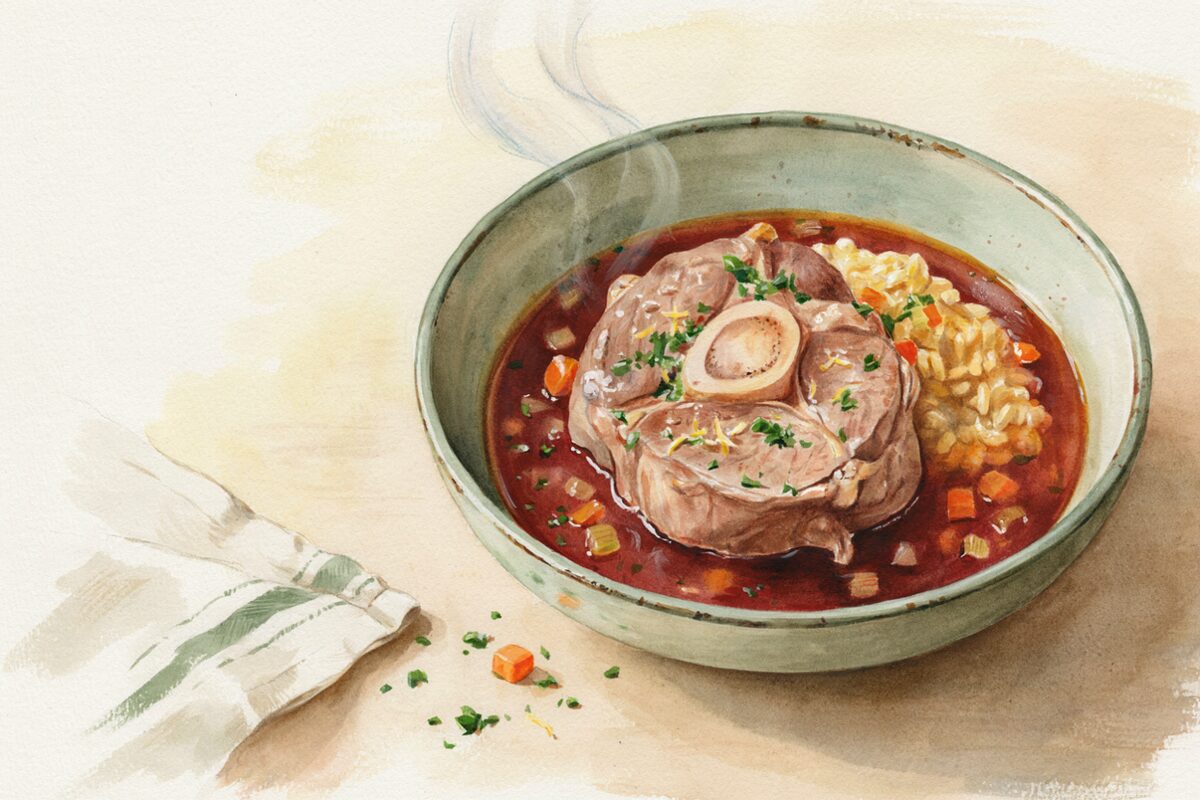
Cross-cut veal shanks browned deep and braised low with wine, soffritto, and tomato until the meat surrenders off the bone — finished with bright gremolata and served over risotto, polenta, or mash.

Ingredients
Method
Cook's notes
What osso buco is. "Osso buco" means "bone with a hole" — cross-cut veal shanks with a marrow-filled bone at the center. That marrow is the delicacy: scoop it out with a small spoon and spread it on bread or stir it into the risotto.
Tie the shanks. A loop of kitchen twine around each one keeps the meat attached to the bone through the braise, so you get a beautiful whole portion instead of a pile of shreds.
Tomato or "in bianco." The oldest Milanese osso buco is made in bianco — no tomato, just wine and broth — while the more familiar version adds tomato for a richer, redder sauce. This recipe uses a modest amount; leave the tomato out for the traditional pale version and lean on the wine and stock.
Gremolata is the point, not a garnish. The raw lemon zest, garlic, and parsley cut through all that richness and wake the dish up. Add it at the very end, off the heat, so it stays bright. (See the gremolata recipe for the classic and a few variations.)
Give it a bed. The classic Milanese partner is saffron Risotto alla Milanese, but soft polenta or mashed potatoes are just as good under all that sauce.
Even better the next day. Like most braises, osso buco deepens overnight — make it a day ahead, chill, lift off any set fat, and reheat gently.
Wine choice: a dry white (the traditional Milanese pick) keeps the sauce lighter and brighter; a dry red (Sangiovese or similar) makes it deeper and more robust. Either works.
Easier, if you like
- Slow cooker: brown the shanks and build the soffritto and wine on the stove as written, then tip everything into a slow cooker and cook on Low for 6–8 hours, until fork-tender.
- Can't find veal? Cross-cut beef shanks (sold as "beef osso buco") work with the same method — they may want an extra 30–60 minutes to get tender.
- Skip the twine in a pinch — the shanks may loosen from the bone, but they'll still be delicious; just plate them carefully.
How to make it gluten-free or dairy-free
Gluten-free: dredge the shanks in a gluten-free all-purpose flour or cornstarch instead of wheat flour (or skip the dredge for a slightly thinner sauce), and serve over polenta or mashed potatoes.
Dairy-free: brown the shanks in all olive oil instead of the butter; the braise is otherwise dairy-free.