 Spare Spoons Kitchen
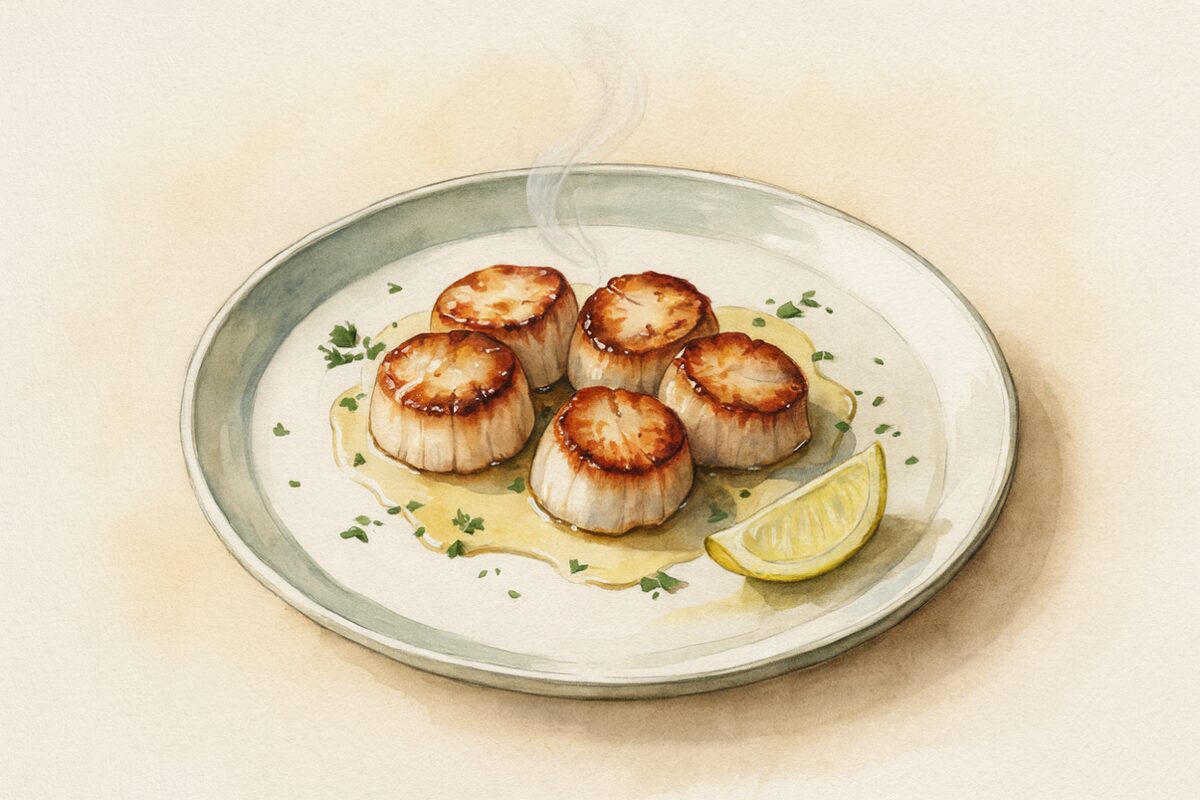
Seared Sea Scallops
A golden-crusted, tender scallop is a ten-minute dinner once you know the three rules: buy them dry, get them bone-dry, and don't move them in the pan.

Ingredients
Before you start
Get these into the state the recipe asks for first — the steps that use them won't wait.
- Scallops, side muscle pulled off and patted bone-dry — the crust depends on it, and there's no doing it once the oil is smoking
Method
Cook's notes
"Dry" vs. "wet" scallops — this matters more than anything. Wet (or "wet-packed") scallops are treated with a phosphate solution that plumps them with water; in the pan that water floods out and they steam grey instead of browning. Dry (dry-packed, "chemical-free") scallops sear beautifully. Wet ones look stark bright-white and sit in milky liquid; dry ones are ivory-to-pinkish and a little tacky. Ask the fish counter, or check the label.
Dry them like you mean it. Surface moisture is the enemy of a crust. Pat both sides, then let the scallops sit on a paper-towel-lined plate for a few minutes (uncovered in the fridge for 30 minutes is even better) so they dry further before searing.
Don't crowd the pan. Too many scallops at once drops the temperature and they steam. Give each one room; sear in two batches if you need to, keeping the first batch warm.
Just opaque is done. Scallops go from tender to rubbery in seconds. Pull them when the sides turn opaque and the center is still a touch translucent — they finish on the plate. When in doubt, under- rather than over-cook.
Cooking from frozen. Frozen scallops work beautifully — often fresher than the "fresh" ones at the counter, which were usually frozen anyway. The trick is to thaw them gently and dry them hard. Thaw overnight in the fridge (on paper towels or in a colander so the melt drains off), or seal them in a bag and submerge in cold water for 20–30 minutes; never use warm water or the microwave, which cook them unevenly and turn them rubbery. Thawing leaves them extra wet, so pat them very dry, rest them on a paper-towel-lined plate for 15–30 minutes, and blot once more right before they hit the pan. Check the bag, too: you still want plain "dry" scallops — the ingredient list should read just "scallops," not "scallops, water, sodium tripolyphosphate," or they'll steam instead of sear.
Serve them on something: a coin of compound butter melts beautifully over the top, or set them over pasta, risotto, corn, or a crisp salad. A squeeze of lemon is all they truly need.
Want to make them special? Finish them in a nutty brown butter with capers and lemon for a restaurant-style plate — same sear, one more step.
Easier, if you like
- Skip the side-muscle hunt: many scallops come with the muscle already removed — a quick look is all it takes. If it's still on, it peels right off with your fingers.
- No lemon? A splash of white wine or even a dab of the compound butter finishes them just as well — the point is a little acidity or richness against the sweet scallop.
Naturally gluten-free; easy to make dairy-free
Gluten-free: naturally gluten-free as written.
Dairy-free: skip the butter finish and use a little more oil, or a spoon of ghee (clarified) or plant butter — the sear is the same.