 Spare Spoons Kitchen
Homemade Pasta Dough
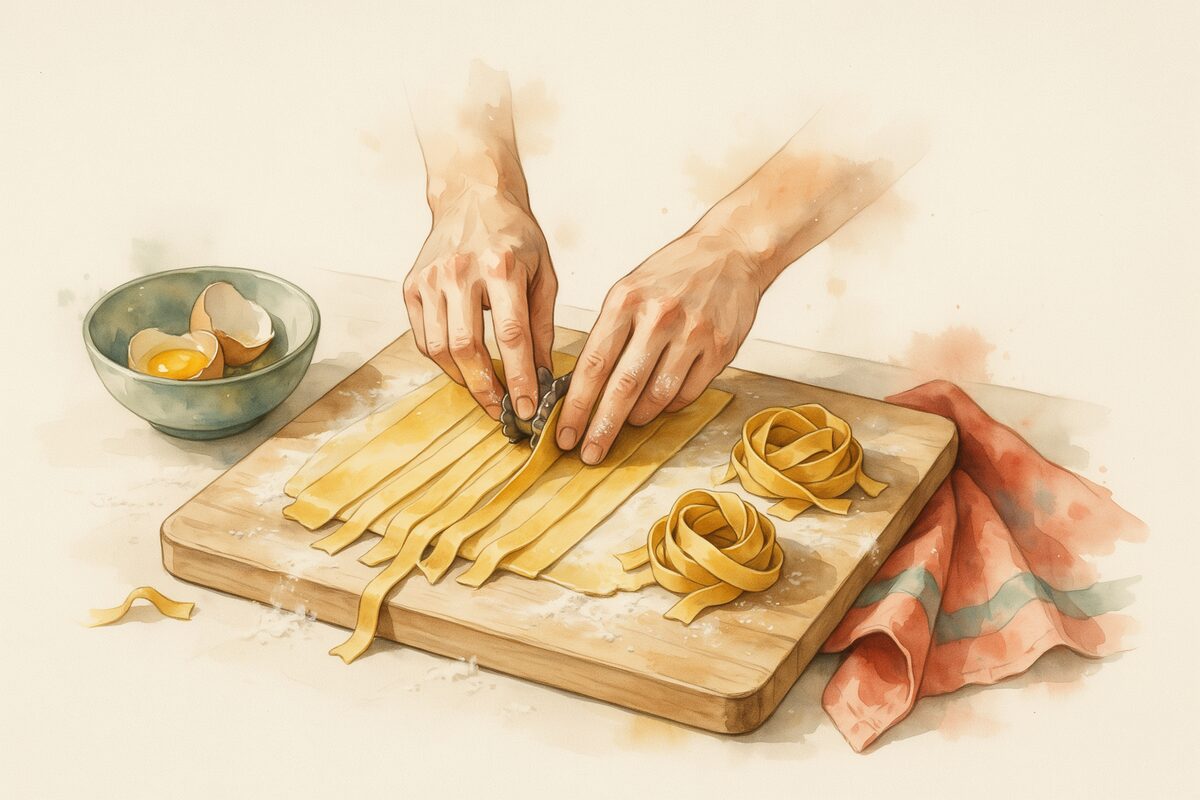
Tender egg pasta made the low-effort way — weigh the wet right in the mixer bowl, let the dough hook knead it for you, then roll and cut. A splash of olive oil makes it a little more tender than most. Roll it for fettuccine or pappardelle and toss it with any of the pasta sauces here.

Ingredients
Method
Cook's notes
Provenance: adapted from Helen Rennie's pasta dough — her egg-rich formula of 300 g flour to 185 g wet (2 whole eggs + 3 yolks, topped up with water) — with my own practically-no-knead mixer method and a little olive oil added on top of the wet for a more tender bite.
Why the oil: fat coats the flour and limits gluten development, so the cooked pasta is a shade more tender and less chewy. Ten grams in 185 g of wet is plenty; more and the dough gets slack.
The 185-gram trick: weighing the eggs and water together to a fixed weight is what makes the dough consistent batch to batch — egg sizes vary, the total doesn't.
Don't over-rest. An hour on the counter hydrates the flour and relaxes the gluten so it rolls without snapping back; overnight in the fridge is fine, but much longer and it discolors.
Which flour — and how tender you want it. Protein sets the texture. “00” flour (Caputo) is finely milled and lowest in gluten, so it rolls silky and cooks up the most tender — the classic choice for fresh egg pasta, and what I reach for now. All-purpose is the easy everyday option: a shade less silky, still tender and reliable. Bread flour (what this recipe first used) has the most protein — a sturdy, springy, chewier noodle that stands up to rolling but comes out firmer than some of us like, so use it only if you want more bite. For a little extra tooth without the full chew, swap 30–50 g (10–15%) of the flour for semolina. Two small things when you switch: the lower-protein flours knead a bit faster (about 10 minutes) and drink a touch less water, so if the dough turns sticky, work in a spoonful more flour.
Toss it with: the pesto, the Bolognese, the fettucine al limone, or the goat cheese & lemon pasta — any of the pasta sauces here.
On the right tools: rolling by hand is hard to get thin enough and takes real effort. A pasta rolling machine is worth the investment once this becomes a habit — see the pasta rolling & cutting picks in the Tool Kit. Ribbons like fettuccine and pappardelle can always be cut by hand; I'm planning a video on that.
Easier, if you like
- No stand mixer? Make a flour well on the counter, pour the wet (and oil) into the middle, and pull the flour in with a fork; then knead by hand about 10 minutes until smooth. Rest the same way.
- No pasta roller? Roll each piece out by hand with a pin as thin as you can on a floured counter, let the sheets dry a few minutes, then fold and slice into wide ribbons — pappardelle is the forgiving shape to cut by hand.
Notes on vegan and gluten-free
Vegan: this is an egg dough, so there's no simple swap — an eggless semolina-and-water pasta is a different recipe (and a different texture).
Gluten-free: tricky, since the gluten is what makes it roll and stretch; a 1:1 GF flour blend with a little xanthan gum will work but stays more delicate — handle it gently and roll a touch thicker.