 Spare Spoons Kitchen
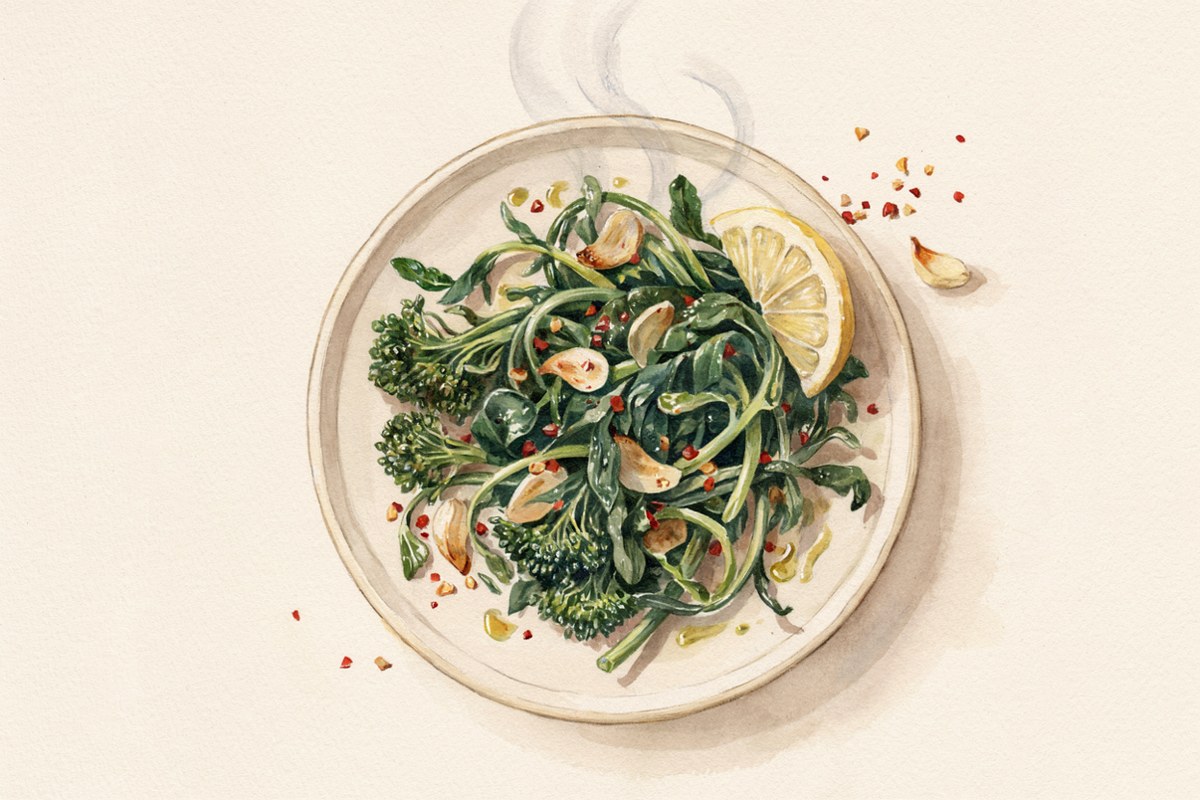
Sautéed Broccoli Rabe
garlic, chili & lemon
Broccoli rabe blanched to tame its bite, then sautéed in olive oil with garlic and a little chili and finished with lemon. Pleasantly bitter, quick, and the perfect green foil for anything rich — osso buco, sausage, or a spoon of polenta.

Ingredients
Method
Cook's notes
What it is: broccoli rabe (rapini, cima di rapa) is a leafy green with small florets and a bracing, mustardy bitterness — more a cousin of the turnip than of broccoli. That bitterness is the point; it's what makes it such a good partner for rich, fatty food.
Blanch or don't. Blanching mellows the bite and keeps the color vivid — best if you or your table find it sharp. If you love the bitterness (many do), skip it: sauté the raw rabe straight in the oil with a splash of water and a lid for a few minutes to soften, then finish uncovered.
Broccolini instead: broccolini (baby broccoli) is much milder and sweeter, with no real bitterness — no blanching needed, just sauté. Regular broccoli, cut small, works the same way. Use whichever you can find; the garlic-chili-lemon treatment flatters them all.
Cicoria — the Roman way with any bitter green. This exact move — blanch, then sauté (ripassare, to re-pass it in the pan) with garlic and chili — is how Rome cooks its greens. Swap the rabe for cicoria (catalogna chicory or dandelion greens): it runs more bitter than rabe, so give it a slightly longer blanch, 2–3 minutes, and squeeze it well dry before the pan. Escarole, puntarelle, even Swiss chard or mature spinach all take the same ripassata treatment — it's the template for any bitter green.
An anchovy makes it Roman: melt one or two oil-packed anchovy fillets into the oil with the garlic — they dissolve into savory depth (not fishy) and make it a classic broccoli rabe aglio, olio e acciughe. (That version is no longer vegan.)
Serve it next to osso buco or Italian sausage, over a spoon of soft polenta, tossed with orecchiette, or piled on garlic-rubbed toast. The bitter green cuts straight through anything rich.
Easier, if you like
- Pre-washed broccolini skips both the trimming and the blanching — the milder green goes straight into the pan, so it's the fastest route to a green side.
- Frozen chopped greens (broccoli rabe or broccoli) work in a pinch — thaw, squeeze very dry, and sauté; no blanching needed.
Vegan and gluten-free as written
Milder: use broccolini or broccoli instead of rabe, and skip the blanch — you lose the bitterness but keep the garlicky, lemony character.
Not vegan, more savory: melt an anchovy or two into the oil with the garlic, the classic Roman touch.
No lemon? A splash of vinegar (red wine or white) at the end brings the same brightness.