 Spare Spoons Kitchen
Risotto
alla Milanese

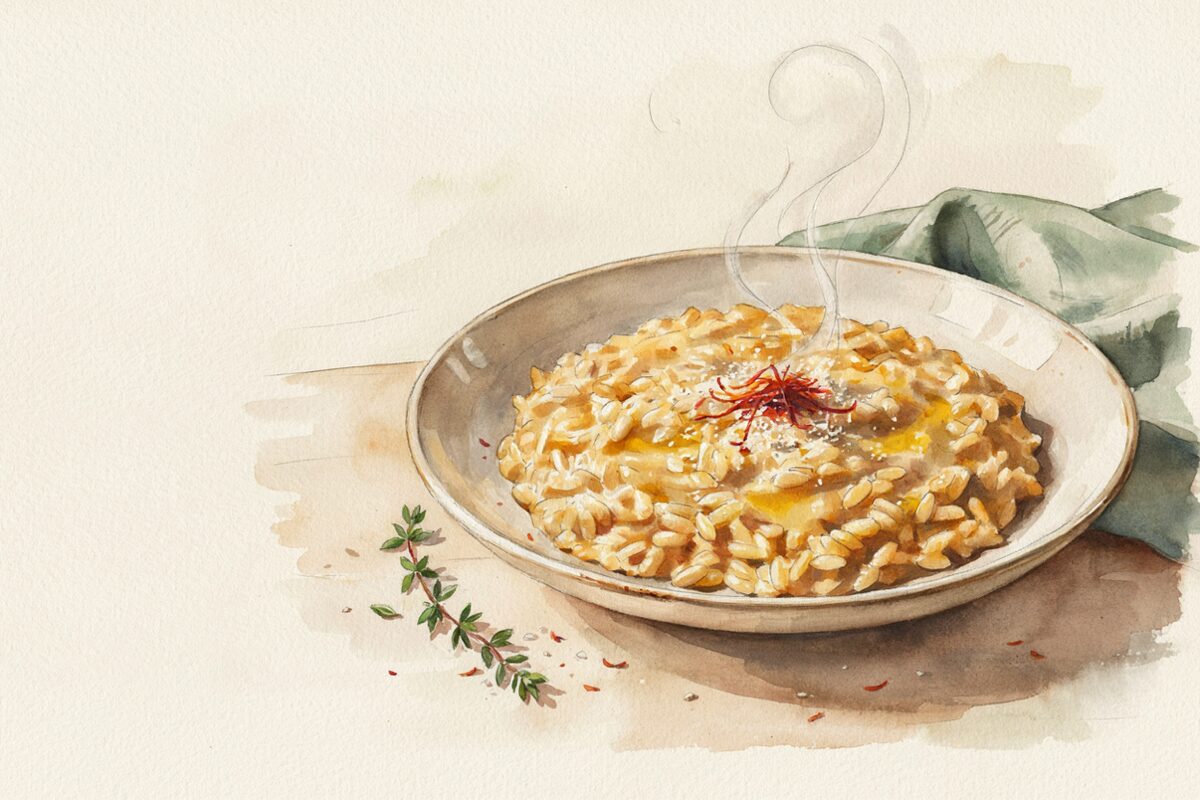
The golden saffron risotto of Milan — creamy, glossy, and perfumed — the classic bed for osso buco. Made the traditional stovetop way, or nearly hands-off in the Instant Pot.

Ingredients
Before you start
Get these into the state the recipe asks for first — the steps that use them won't wait.
- Stock, warmed and held at a bare simmer — cold stock stalls the rice every time you add a ladle
- Saffron, crumbled into a ladle of that warm stock — it needs a few minutes to give up its color and perfume
- Parmigiano, grated, and the finishing butter cold and cut — the mantecatura happens off the heat in under a minute, which is no time to be grating cheese
Method
Cook's notes
The saffron is the soul. Risotto alla Milanese is defined by saffron — it gives the golden color and delicate perfume. Steep it in warm stock first so it disperses evenly; a good pinch (about ¼ tsp of threads) is plenty. It's the priciest thing in the recipe and it's still not much: a ¼ tsp is roughly 0.2 g, so a standard 0.06 oz supermarket jar carries you through about eight batches. Buy threads, never powder — powdered saffron is the easiest spice in the store to cut with something cheaper.
Rice matters. Use a short-grain risotto rice — Arborio is the common one; Carnaroli holds its bite even better. Don't rinse it: that surface starch is what makes risotto creamy.
The mantecatura is non-negotiable. Beating in cold butter and Parmigiano off the heat is what makes risotto glossy and creamy — cold butter emulsifies better than melted. Grate the cheese yourself if you can: pre-grated Parmigiano is coated with anti-caking agents that can stay faintly gritty exactly where you want it silkiest.
Go by the rice, not the clock. You may not need all 5 cups of stock, or you may want a splash more — the rice decides. It's done when it's creamy and al dente: tender with a slight bite at the center.
All'onda — serve it loose. Proper risotto spreads and ripples like a wave; it firms as it sits, so loosen with a splash of hot stock right before serving.
The traditional touch: classic Milanese risotto is enriched with a spoon of beef bone marrow softened in with the onion. If you're making osso buco, scoop the marrow from the shanks right into the risotto — luxurious and completely authentic.
Made for osso buco. This is the Milanese pairing — spoon it under or beside the osso buco and its gremolata. It's also lovely on its own or under seared scallops.
Stovetop vs. Instant Pot: the stovetop way (ladling in stock) gives the most control and silkiest texture; the Instant Pot is nearly hands-off and remarkably good — just don't skip the sauté or the finishing butter and cheese. For a plain, everyday version, see the Instant Pot Risotto.
Easier, if you like
- Don't stand there stirring — use the Instant Pot. The method selector above swaps in the pressure-cooker version: 6 minutes sealed instead of 20 minutes of ladling, and it's genuinely good. The finish is identical, and the finish is where risotto is actually made.
- Skip the stock entirely: Better Than Bouillon (Roasted Chicken, or the Vegan-certified No Chicken Base) — 1 tsp per cup of hot water, so 5 tsp / 30 g for the full 5 cups. It lives in the fridge door, which means this recipe stops requiring a shopping trip. Soup aisle at Walmart or Kroger.
- Cook it ahead — the restaurant trick. Nobody in a restaurant starts your risotto when you order it. Cook it to about 12 minutes (still firm, still soupy), spread it thin on a sheet pan to stop it cooking, and refrigerate up to a day. At dinner, tip it back into the pan with a cup of hot stock and finish — 6–8 minutes to done. This is how you serve risotto and talk to your guests.
- Frozen chopped onion goes in straight from the bag — no board, no knife, no crying. It's soffritto; nobody will know.
Gluten-free as written; vegetarian and vegan paths
Vegetarian: use vegetable stock, and a vegetarian hard cheese in place of the Parmigiano (traditional Parmigiano is made with animal rennet).
Vegan: vegetable stock, olive oil or plant butter, and a spoon of nutritional yeast or a vegan parmesan — the saffron still carries it.
Gluten-free: naturally gluten-free (it's rice); just use a gluten-free stock.