 Spare Spoons Kitchen
Overnight
Waffles
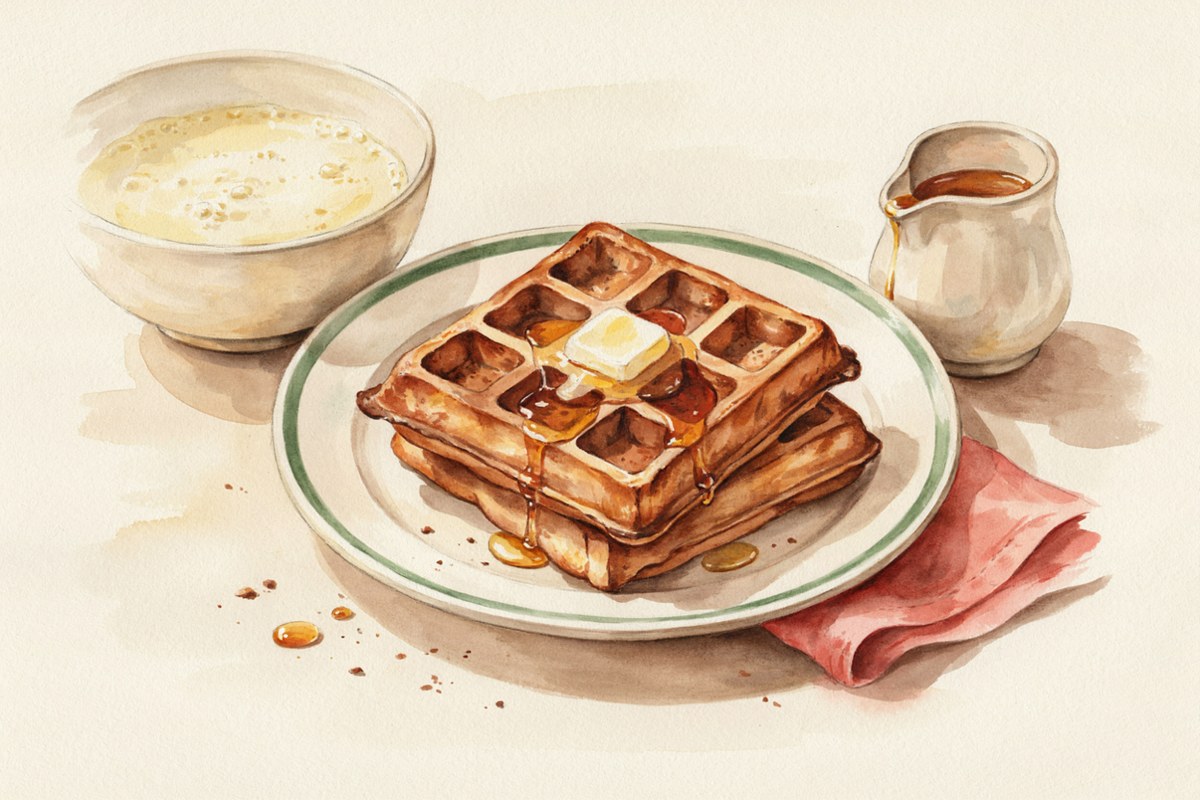
Yeast, not baking powder — which is the whole difference. Five minutes of whisking before bed, an overnight ferment on the counter, and in the morning a thin, foamy, faintly beery batter that cooks into the crispest waffle you'll ever make: shattering outside, custardy inside, and tasting of something. If you didn't plan ahead, the Simplify toggle swaps in a buttermilk version you can have on the table in twenty minutes.

Ingredients
Before you start
Get these into the state the recipe asks for first — the steps that use them won't wait.
- A bowl at least three times the size you think you need — the batter more than doubles overnight and the classic failure is finding it on the counter in the morning
- A wire rack, and the oven set to 200°F — stacked waffles steam themselves soft within a minute — the rack is what keeps them crisp while you cook the rest
Method
Cook's notes
Gluten-free: yes, and waffles are a good place for it. Use Bob's Red Mill Gluten Free 1-to-1 Baking Flour (the blue bag) — it's rice-based with xanthan gum already in it and swaps cup for cup. Do not reach for their Gluten Free All Purpose Baking Flour (the red bag) without adjusting: it's built on garbanzo and fava bean flour, contains no xanthan gum, and the bean flavour shows. One trap if you weigh your flour — "1-to-1" means cup for cup, not gram for gram, and the blend runs about 160 g per cup against roughly 125 g for wheat. Swap the same weight and you'll get a slacker batter than intended, so go by consistency. Waffles suit gluten-free flour better than most baking does, because you want a crisp shell rather than chew.
Why the baking soda in the morning. Overnight fermentation makes the batter mildly acidic. A pinch of soda neutralises some of that and throws off carbon dioxide on contact, which is what gives these their lacy, open, almost tempura-like structure in the iron. Leave it out and you still get a good waffle, but a denser one.
Leaving milk on the counter overnight. This is traditional and it's how the recipe has always been written — the fermentation acidifies the batter, which is its own preservative. If your kitchen runs warm, above about 75°F, or you'd simply rather not, ferment it in the fridge instead and pull it out an hour before you cook. It'll be less puffed and slightly less flavourful, and it will still be a better waffle than baking powder makes.
Belgian irons versus standard ones. Deep Belgian pockets take roughly half again as much batter, so expect about two-thirds the yield from the same bowl. They also need the longer end of the cooking time. The servings count here assumes a standard round American iron.
They freeze beautifully, which is the real argument for making a big batch. Cool them completely on the rack, freeze flat on a tray, then bag them. Straight from the freezer into a toaster on a medium setting and they come back genuinely crisp — better than a fresh waffle that's been sitting.
The batter keeps too. Whatever you don't cook will hold three or four days covered in the fridge and arguably improves — it gets tangier. Whisk it before using, and add a fresh pinch of soda if it's been more than a day.
Don't grease a non-stick iron. There's half a cup of butter in the batter and that's plenty; oil sprayed on top of it goes gummy and builds up a varnish over time. If your iron genuinely sticks, brush it lightly the first time only.
Thin batter is right. Every time I make these I have a moment of thinking I've mismeasured the flour. Two cups of flour to two and a half cups of liquid looks wrong in the bowl and is correct in the iron — a thick batter gives you a cakey waffle, which is exactly what this recipe exists to avoid.
Easier, if you like
- Use the Simplify toggle if you didn't start last night — the buttermilk version is twenty minutes start to finish and needs no planning at all.
- Make the full batch and freeze most of it. The cooking is the same effort for eight as for four, and future-you gets breakfast out of the toaster.
- Melt the butter in the milk in one jug in the microwave rather than dirtying a pan — warm the milk, drop the butter in, let it melt while you deal with the yeast.
- You don't need to whisk the eggs separately. Crack them straight into the fermented batter with the soda and whisk once.
Vegetarian · gluten-free with a 1-to-1 blend
Gluten-free: Bob's Red Mill 1-to-1 (blue bag) or King Arthur Measure for Measure, cup for cup. Rest the finished batter ten minutes before the first waffle so the rice flour hydrates — see the note above for the weight-versus-volume trap.
Dairy-free: unsweetened oat or soy milk and a neutral oil in place of the butter. Oat milk browns best of the plant milks.
No yeast? That's what the Simplify version is for — it's a different recipe rather than a substitution.
Buttermilk can replace the milk in the overnight version if that's what you have; the result is tangier and slightly less puffed.