 Spare Spoons Kitchen
Vegetable Broth
roasted or raw · stovetop or Instant Pot
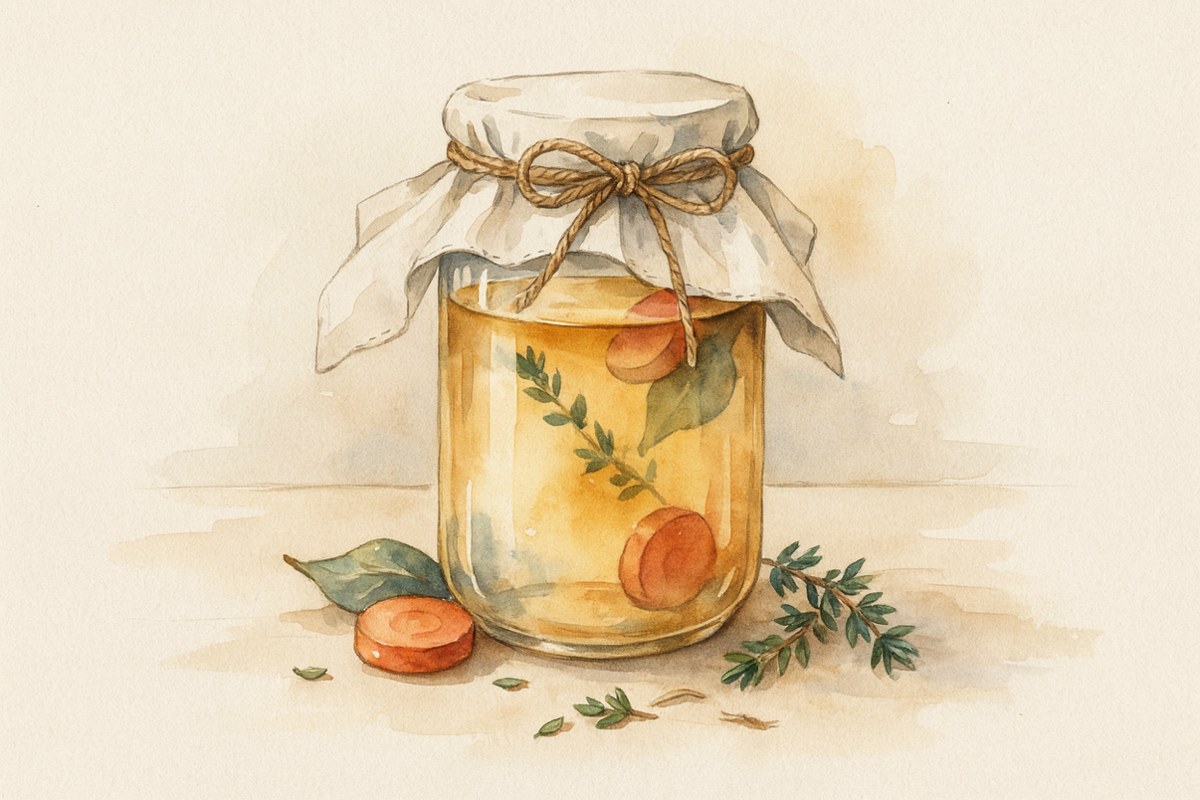
A clean, savory broth from everyday aromatics — onion, carrot, celery, garlic, herbs. Leave the vegetables raw for a light, fresh broth or roast them first for a deep, browned one; simmer it on the stove or pressure-cook it. Freezes beautifully in one-cup cubes. Vegan and gluten-free.

Ingredients
Method
Cook's notes
Roasted vs raw — how, and why. Raw is bright, light, and fastest. For a deeper, browner broth, toss the onions, carrots, celery, garlic (and the mushrooms) with a little oil — and a spoon of tomato paste for color, if you like — on a sheet pan and roast at 220°C / 425°F for 30–40 minutes, until the edges are well browned. Splash a little water onto the hot pan and scrape up every stuck-on bit: that fond is the flavor, so it all goes into the pot.
What goes in, what stays out. Great: onion, leek, carrot, celery, garlic, mushroom, tomato, fennel, corn cobs, herb stems, parsley. Leave out the brassicas — broccoli, cauliflower, cabbage and their trimmings turn the broth sulfurous and bitter — and go easy on beets (they bleed color) and starchy potato (clouds it).
Make it from scraps — nearly free. Keep a gallon freezer bag by the freezer door and drop in clean vegetable scraps as you cook: onion ends, carrot peels, celery tops, mushroom stems, herb stems, garlic skins. When the bag's full, tip it into the pot with water and go. That's the real reason to make your own.
Salt light, or not at all. Unsalted broth is the more useful thing — you can pour it into anything and season the finished dish. Salt it at the end only if you're drinking it as-is.
Freezing — the whole point of a batch. Cool the strained broth quickly, then portion it. Souper Cubes freeze it into tidy 1-cup blocks you pop out and stack in a labeled freezer bag; a regular ice-cube tray gives you ~2-tablespoon cubes for the times a recipe wants just a splash — a pan sauce, a risotto, a pot of rice. Freeze a few of each. Broth keeps about 4–6 months frozen and 4–5 days in the fridge; label with the date.
Use it: anywhere a recipe says broth or stock — risotto, soups, braises, a pot of rice or grains cooked in broth instead of water.
Easier, if you like
- Scrap-bag broth is the low-effort default: no shopping, no chopping — just tip a bagful of saved vegetable scraps into the pot with water.
- Pre-cut mirepoix (bagged onion-carrot-celery from the produce section) skips the knife work entirely if you're starting from fresh.
Vegan and gluten-free as written
No fresh herbs? Dried work fine — about 1 tsp dried thyme and a big pinch of dried parsley in place of the fresh.
Umami boost: a couple of dried mushrooms, a strip of kombu, a spoon of miso stirred in at the end (off the heat), or a splash of soy sauce or tamari all deepen a meatless broth.
Gluten-free: naturally gluten-free — just check any tamari or miso is labeled GF.