 Spare Spoons Kitchen
Tiramisù
coffee, mascarpone, cocoa
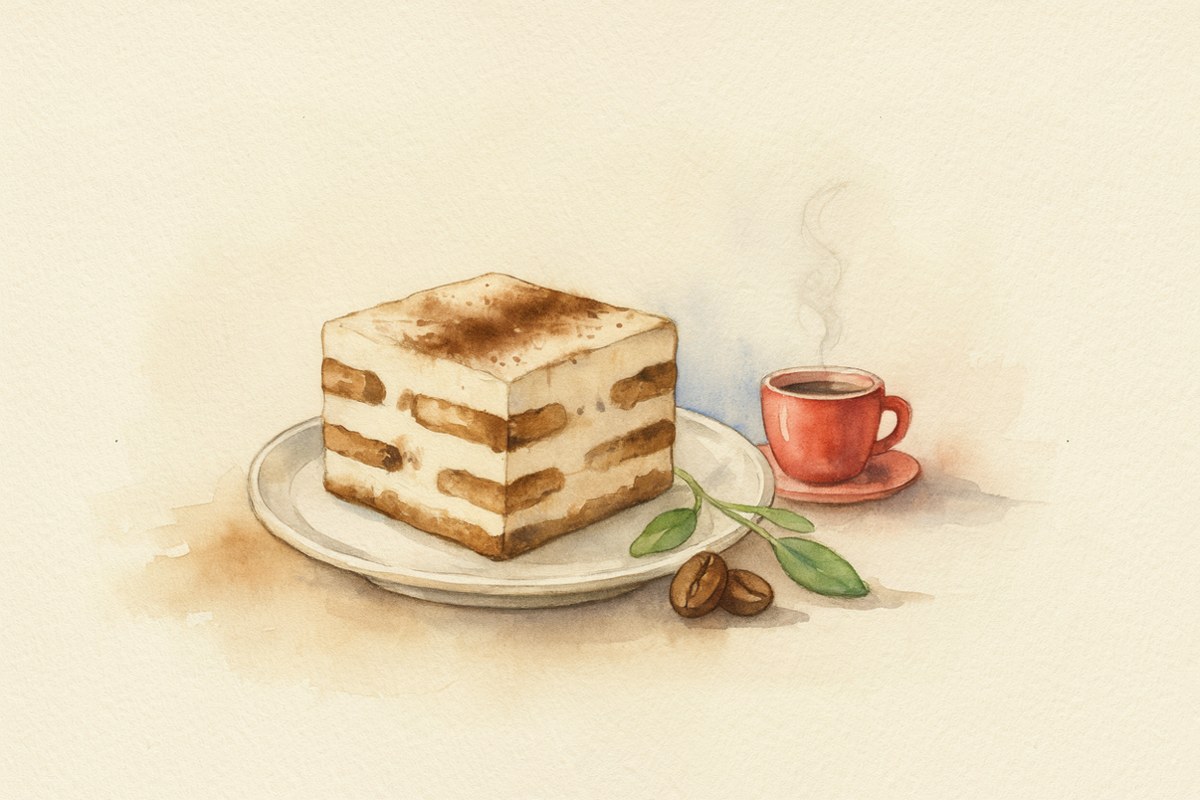
The famous Italian coffee dessert — crisp savoiardi dipped in strong espresso, layered with a cloud of mascarpone cream, and dusted with bitter cocoa. This version gently cooks the egg yolks into a warm zabaglione, so the cream is food-safe and sets firm; there's a no-cook, egg-free Simplify version too, and the traditional Italian way — no cream at all, whipped egg whites instead — has its own page at Tiramisù Classico. No oven — it just needs a few hours in the fridge, and it's even better made a day ahead.
Ingredients
Method
Cook's notes
Why cook the yolks (and the traditional raw way). The classic Italian method whisks the yolks raw and folds in raw beaten egg whites — no cooking at all. Warming the yolks with the sugar over a bain-marie to 160°F pasteurizes them and, as a bonus, sets the cream firmer and more mousse-like — the safer choice for anyone avoiding raw egg (pregnancy, young children, older adults, anyone immune-compromised). If you'd rather go traditional: whisk the raw yolks with the sugar until pale, fold in the mascarpone, then fold in 3 egg whites beaten to soft peaks in place of the whipped cream — and use the freshest, safest eggs you can find.
The dip is everything. Savoiardi are meant to be dry and crisp, and they drink coffee fast. One second per side — a quick in-and-out, not a soak. If your coffee is good and strong, that brief dip carries plenty of flavor, and the fingers stay intact instead of collapsing. This is the single most common tiramisù mistake.
Mascarpone, at room temperature. Cold mascarpone fights the cream and folds in lumpy; let it sit out until soft first. And handle it gently — mascarpone is delicate and can break or turn grainy if you beat it hard. Fold, don't whip.
It wants to be made ahead. Tiramisù needs at least 4–6 hours to set, and it's genuinely better the next day, once the ladyfingers have softened into the cream. It keeps 2–3 days covered in the fridge — a perfect make-ahead for a dinner or a crowd. Dust the cocoa on just before serving, though; dusted early it goes damp and patchy.
Shaving the chocolate. A thin snapping bar like Lindt Excellence fights a peeler — it's only about 4 mm thick and engineered to break cleanly, so you get chips and dust rather than shavings. The easy answer is a Microplane: hold any bar and rasp it straight over the top. You get a fine chocolate snow that settles into the cocoa instead of perching on it, and it won't slide off when you cut the squares. If you want proper curls, use a thicker baking bar (Ghirardelli, Guittard, or a chunk of couverture) and draw a Y-peeler down the wide flat face — there's enough depth to bite into. Either way, temperature does most of the work: cold chocolate shatters and warm chocolate smears on your fingers, so let it come to room temperature first. For curls, dip the peeler blade in hot water and dry it, and they form far more willingly.
The coffee. Espresso is classic, but a strong moka pot, a concentrated brew, or 2 tbsp instant espresso powder stirred into 1¼ cups hot water all work — it just needs to be strong and fully cooled. Weak coffee gives a pale, timid tiramisù.
No-alcohol. It's lovely without any liquor at all — leave the coffee liqueur out and use a splash of water (or a little vanilla) in place of the Marsala in the zabaglione. This is how it's often made for the whole family.
Provenance: a young dessert by Italian standards — most trace it to the Veneto region (Treviso) in the 1960s–70s. The name means roughly "pick-me-up," for the coffee and the sugar.
Easier, if you like
- Make it in glasses or jars. Layer the dipped ladyfingers (broken to fit) and cream in individual glasses or mason jars — no neat cutting, easy to make ahead, and each person gets their own. Ideal for a crowd.
- Instant espresso powder is the fastest way to strong coffee: 2 tbsp in 1¼ cups hot water, then cool. No espresso machine needed.
- Skip the cooking entirely with the 🥄 Simplify version — no eggs, no bain-marie, just mascarpone folded into sweetened whipped cream. A little lighter and sweeter, and completely food-safe.
Vegetarian as written; easily gluten-free & egg-free
Gluten-free: use gluten-free savoiardi (they exist — GF ladyfingers here) or thin fingers of a gluten-free sponge; everything else is naturally gluten-free.
Egg-free: make the 🥄 Simplify version — it has no eggs at all, just mascarpone folded into sweetened whipped cream.
Kid-friendly / coffee-free: dip the ladyfingers in warm milk with a spoon of cocoa and a little vanilla instead of coffee — not strictly tiramisù, but the same lovely layered idea, and no caffeine.
Dairy-free is a stretch here — mascarpone and cream are the dessert — but a vegan mascarpone-style cream cheese plus whipped coconut cream gets you a fair approximation; the texture will differ.