 Spare Spoons Kitchen
Smoked
Brisket Flat
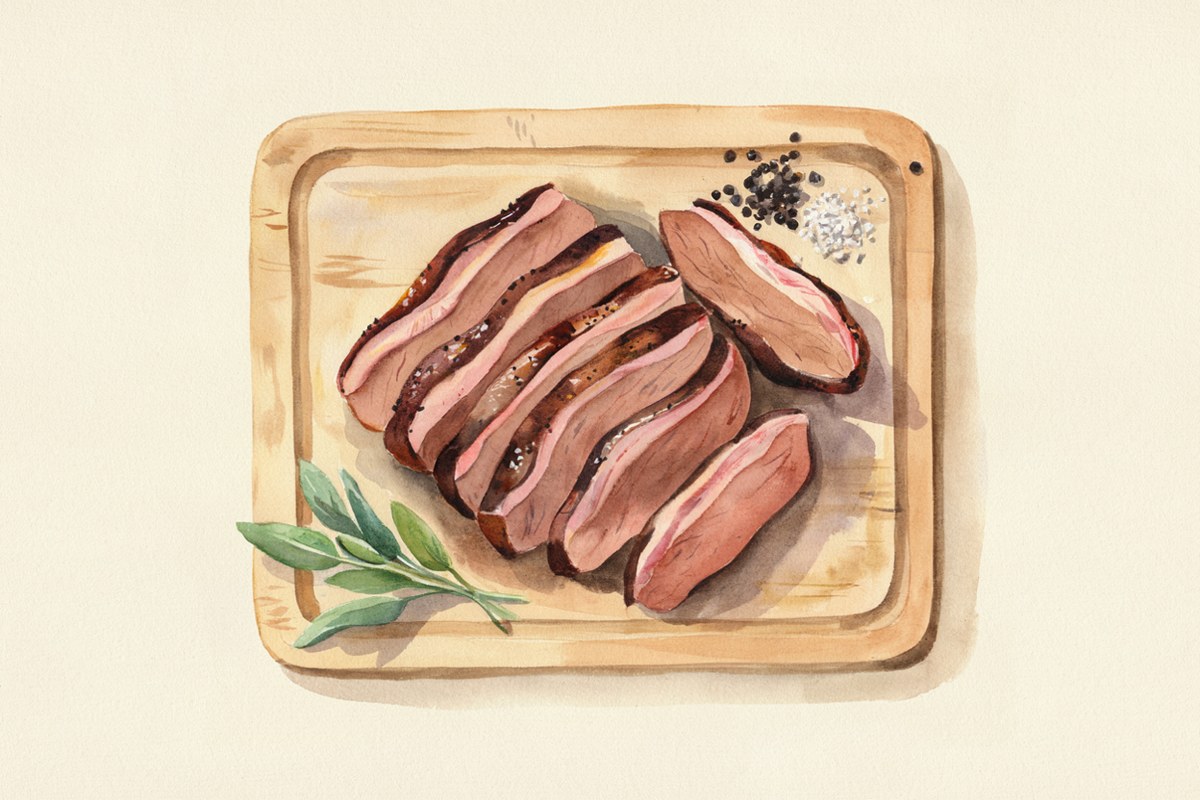
A whole-day smoke that mostly cooks itself — a beef brisket flat rubbed with nothing but coarse salt and pepper, smoked low at 225°F until the bark sets, wrapped to power through the stall, and pulled when it probes like butter around 203°F. Sized for a 5–6 lb first-cut flat that feeds 6–8. Written for a Traeger, but any smoker (or, in a pinch, a low oven) follows the same road.

Ingredients
Method
Cook's notes
The stall is normal — wait it out or wrap. Somewhere around 150–165°F the internal temp stops climbing, sometimes for an hour or two, as moisture evaporating off the surface cools the meat. It always breaks. Wrapping is how you speed through it.
Go by feel, not the clock. A flat can hit its window anywhere from about 1 to 1¼ hours per pound at 225°F, but every brisket is different. Pull it when it probes tender near 203°F — a piece that's 200°F but still firm needs more time; one that's buttery at 201°F is done.
Butcher paper vs. foil. Unwaxed pink butcher paper breathes, so the bark stays firm and smoky; foil (the 'Texas crutch' proper) traps more steam, cooks a touch faster, and softens the bark. Either works — paper for bark, foil for speed.
Wood. Oak and hickory are the brisket classics; pecan is milder and friendly; mesquite is strong, so use it sparingly or blended. On a Traeger, the Signature blend is a safe all-rounder.
Salt by weight, and dry-brine if you can. Seasoning the night before and resting it uncovered in the fridge seasons deeper and dries the surface for better bark. Coarse (kosher) salt and 16-mesh pepper give the craggy Texas crust; fine salt can over-season, so weigh it if you're unsure.
Buying the flat. Ask for the 'first cut' or 'flat' — it's the leaner, uniform half that slices neatly. Look for good marbling and a piece that's flexible (not stiff); Prime or upper Choice is worth it here because the flat has less internal fat to protect it.
No Traeger? Same road, different rig. Any smoker at 225–250°F cooks this identically. In the oven you can approximate it — 225°F to 165°F, wrap, finish to ~203°F, rest — but you lose the smoke; add a little smoked salt or run a smoke tube to make up for it.
Want burnt ends? The flat doesn't make them — those come from the fatty point. If burnt ends are the goal, buy a whole packer (point + flat) instead and cube the point after the cook.
Leftovers keep beautifully. Slice or chop for sandwiches; store it in its own juices and reheat gently (a low oven, covered) so it doesn't dry out. It also freezes well in the juices.
Easier, if you like
- Hot-and-fast at 275°F shaves hours off with barely any tradeoff — same steps, wrap at ~165°F, pull at probe-tender ~203°F — about 4–5 hours total for a flat instead of 8. Great when you don't want to babysit all day.
- Season the night before so the morning is just 'put it on the grill.' It's less work and a better crust.
- Rest long, on purpose. A wrapped brisket holds in a towel-lined cooler for 2–4 hours, so you can finish it early and it's still hot at dinner — the rest only improves it.
Naturally gluten-free & dairy-free
Gluten-free: salt, pepper, and garlic are naturally gluten-free — just check any bottled BBQ sauce or store-bought rub you add.
Sauce, or not: a proper salt-and-pepper brisket needs none, but a simple BBQ sauce on the side is welcome — serve it warm so it doesn't cool the slices.
Dairy-free: naturally dairy-free as written.