 Spare Spoons Kitchen
Smoked
Beef Ribs
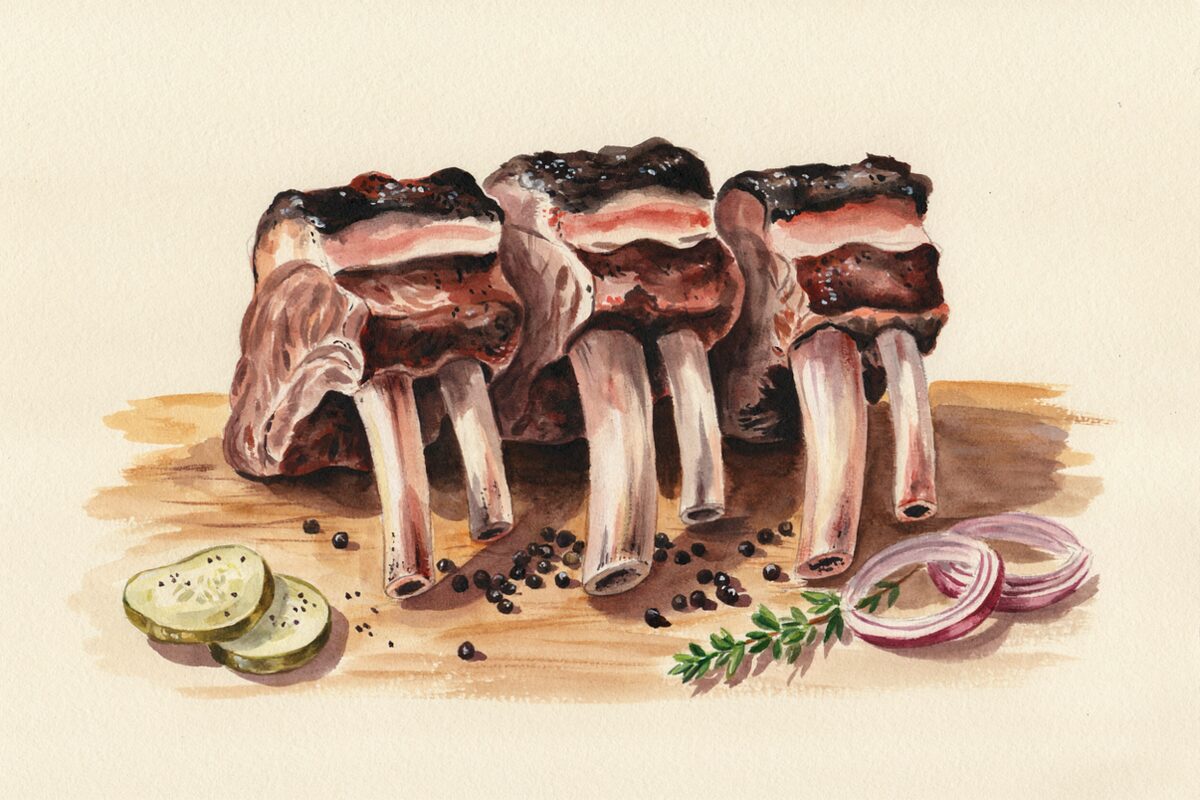
Beef plate short ribs — the enormous "dino ribs" of Texas barbecue — rubbed with coarse salt and black pepper and smoked at 275°F until they probe like butter. Treat them as brisket on a stick rather than as big pork ribs: no 3-2-1, no sugar, no sauce. One bone per person is a serious portion, and the rest afterward matters as much as the smoke. No smoker? Switch to the Oven method — same cut, same seasoning, same finish.

Ingredients
Method
Cook's notes
Buy the right rib — this matters more than anything else here. There are three beef ribs at the counter and only one is the showstopper. Plate short ribs (NAMP 123A, the "dino ribs") come from the belly side, carry a thick slab of meat on top of the bone, and are what Texas barbecue is famous for — this is the cut to ask for. Chuck short ribs are the common retail option, still good and meaty but shorter and less uniform. Beef back ribs are the trap: they're what's left after the ribeye is removed, so most of the meat is already gone and there's little between the bones. Cheap, but they'll disappoint as a centerpiece.
Can't get plate ribs? Use chuck short ribs, and you'll barely notice. English-cut chuck short ribs are in almost every supermarket and cook by identical logic — salt and pepper, 275°F, wrap when the bark sets, pull at probe-tender. Three adjustments. Buy by weight, not by bone: about 1 lb (450 g) per person raw, since they're bone-heavy and yield roughly half that once cooked, which lands at two or three ribs each. They finish faster — start checking tenderness at 4 hours rather than six. And because there's less meat sitting on each bone they dry out more readily, so wrapping matters more here than it does on a plate rib. Worth asking your butcher before you settle, though: plate ribs come off the short plate, and any shop breaking down whole primals can cut them with a few days' notice. It's usually availability in the case, not availability full stop.
Rub variations. Keep sugar to a minimum whatever you choose — more than a spoonful scorches long before you reach temperature on an eight-hour cook, which is exactly why beef rubs stay savory while pork rubs go sweet. The best alternative to plain salt-and-pepper is coffee and chile, whose bitterness plays against the beef fat and deepens the bark. For two plates: 3 tbsp coarse black pepper, 3 tbsp kosher salt, 2 tbsp finely ground dark-roast coffee, 1 tbsp ancho chile powder, 1 tbsp garlic powder, 2 tsp onion powder, and no more than 1 tbsp brown sugar. Two other directions worth knowing: a Montreal-style blend, where coriander and dill seed do something genuinely good with beef; or an ancho-guajillo-cumin rub, which sets the leftovers up perfectly for tacos.
Sauce, if you want one — reach for acid, not sugar. Rich beef wants something sharp cutting through it, which is why a sweet barbecue sauce that's perfect on pork tends to fight these. Chimichurri is the standout: finely chop a cup of parsley with 4 cloves of garlic and a tablespoon of oregano, stir in ½ cup olive oil, 3 tbsp red wine vinegar, a teaspoon of chile flakes, and a good pinch of salt, then let it sit 30 minutes. Spoon it over the sliced meat rather than glazing the ribs. For something more traditionally Texan, a thin mop: a cup of beef broth or the drippings from the wrap, ½ cup cider vinegar, 2 tbsp Worcestershire, and plenty of coarse pepper, warmed and spooned over — savory and loose, never sticky. And a bowl of horseradish cream (crème fraîche, prepared horseradish, lemon, salt) is a third option nobody expects at a barbecue.
Why not 3-2-1? That rhythm was built for pork spare ribs, which are thin, lean-ish, and done in about six hours. Beef plate ribs are a completely different proposition — thick, fatty, full of collagen, and much closer to brisket in how they behave. Wrapping them for two hours in juice and honey would steam away the bark and sweeten meat that's better served savory. Salt, pepper, smoke, time.
Leave the membrane on. The opposite of the pork rule. Beef rib membrane is thicker and considerably harder to peel, and it helps hold that heavy slab of meat to the bone through eight hours of cooking. It renders enough not to bother you.
Probe tender is the only doneness test. A plate rib can read 203°F and still be tough, or be perfect at 201°F — the collagen decides, not the thermometer. Probe in several places between the bones; when the resistance disappears everywhere, they're ready. If it still grabs, give it another 30 minutes and check again.
No sauce. A properly cooked beef rib needs nothing, and sauce mostly gets in the way of the beef and the smoke. If you want something on the table, put it in a bowl on the side and let people choose.
They're expensive and often special-order. Plate ribs have gone from a butcher's throwaway to a prized cut, so call ahead — ask for "beef plate short ribs, three-bone plates." A whole plate runs 4–5 lb and yields three bones, and one bone is a genuinely large portion.
Portions. Figure one bone per person. Two plates gives you six bones, which comfortably covers six and will stretch to eight alongside good sides, since few people finish a whole one. Three plates if your crowd is hungry.
They hold well. Wrapped and cooler-rested, they'll stay hot for two to three hours, so finish early and relax. Leftovers are superb — pull the meat off the bone and it makes remarkable tacos or sandwiches.
What the oven costs you. The Oven method gets you genuinely tender, beefy ribs — what it cannot give you is smoke or a true bark. Compensate with smoked paprika or smoked salt in the rub, and run them under the broiler for 2–3 minutes at the very end to darken and firm the crust. A few drops of liquid smoke in the wrap is a legitimate cheat if used sparingly.
Easier, if you like
- Chuck short ribs are the easier buy. If plate ribs aren't available, English-cut chuck short ribs are in every supermarket and cook exactly the same way — about a pound per person, and start checking for tenderness at four hours. Full details in the notes.
- Hot and fast at 300°F brings it in around five to six hours instead of eight, with very little lost. Same seasoning, same probe-tender finish.
- Season the night before so the day of is just lighting the smoker.
- Finish early on purpose. These hold for hours wrapped in a cooler, and the extra rest only improves them — far better than making guests wait on a probe that isn't ready.
Naturally gluten-free & dairy-free
Gluten-free: salt, pepper, and garlic are naturally gluten-free — the only thing to check is a store-bought rub or any sauce you put on the side.
Dairy-free: naturally dairy-free as written.
No tallow? A little beef fat trimmed from the ribs themselves, rendered in a pan, does the same job in the wrap — or skip it entirely.