 Spare Spoons Kitchen
Sheet-Pan Chicken Thighs
& vegetables, one tray
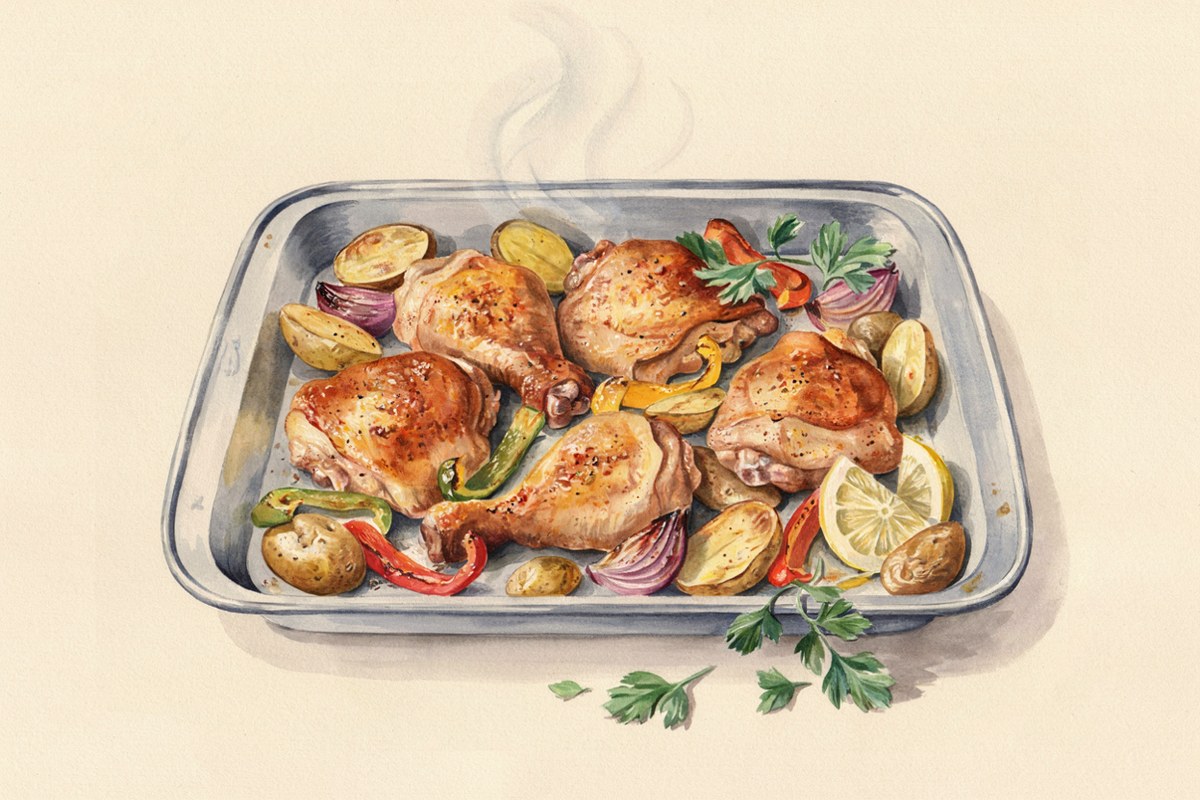
Bone-in, skin-on thighs roasted on a single sheet pan over potatoes and vegetables that soak up every drop of the drippings. Crisp skin, juicy meat, a whole dinner from one tray — and almost nothing to do once it's in the oven.

Ingredients
Before you start
Get these into the state the recipe asks for first — the steps that use them won't wait.
- Pat the thighs very dry and let them sit uncovered while the oven heats — dry skin is the whole secret to crisp skin — surface moisture just steams
- An instant-read thermometer within reach — thighs are done at 175°F, not 165 — the number is the doneness call
Method
Cook's notes
The one number that matters: pull the thighs at 175°F (even up to about 185°F stays juicy), not the 165°F you'd use for breast. Dark meat has connective tissue that melts and turns silky with a little more heat — at 165 it can still be springy. See Chicken Thighs, Any Way for the full doneness story.
Vegetable timing is the whole trick. Dense ones (potatoes, carrots, parsnips, beets) go in first with the head-start roast. Quicker ones (bell peppers, broccoli, green beans, zucchini, cherry tomatoes) go on when the chicken does, or they'll turn to mush. Cut everything to a similar size so it cooks evenly.
Don't crowd the pan. Use the biggest rimmed sheet pan you have and give everything room — packed together, things steam and go soft instead of browning. If it's tight, use two pans.
Skin up, always. The skin needs dry oven air to crisp; buried under vegetables or facing down it just steams. Keep the thighs proud on top and the fat renders down into the veg.
Boneless thighs work too — they cook faster, so add them with the quick vegetables (after the potatoes' head start) and start checking at 15–18 minutes. You lose a little of the skin-crisping, but it's quicker.
Make it a plate: it's a complete dinner as is, but a quick cucumber salad on the side brings a bright, crisp contrast to the rich roasted thighs.
Easier, if you like
- Pre-cut vegetables from the produce aisle (baby potatoes, slaw-cut cabbage, florets) cut the knife work to almost nothing — this recipe is happy with whatever roasts in the same window.
- A foil or parchment liner means the only thing to wash is the bowl you tossed everything in. Worth it on a low-spoons night.
- Skip the herbs and spices and just use salt, pepper, and oil — good thighs and good potatoes don't need much. The seasoning blend is a nice-to-have, not a must.
Gluten-free and dairy-free as written
Different vegetables: almost anything roasts here — sweet potatoes, fennel, Brussels sprouts (halved), cauliflower, shallots. Just sort them into 'dense, goes in first' and 'quick, goes in with the chicken.'
No sheet pan? A large roasting pan or even a big cast-iron skillet works — you just want a single uncrowded layer with the chicken sitting on top.