 Spare Spoons Kitchen
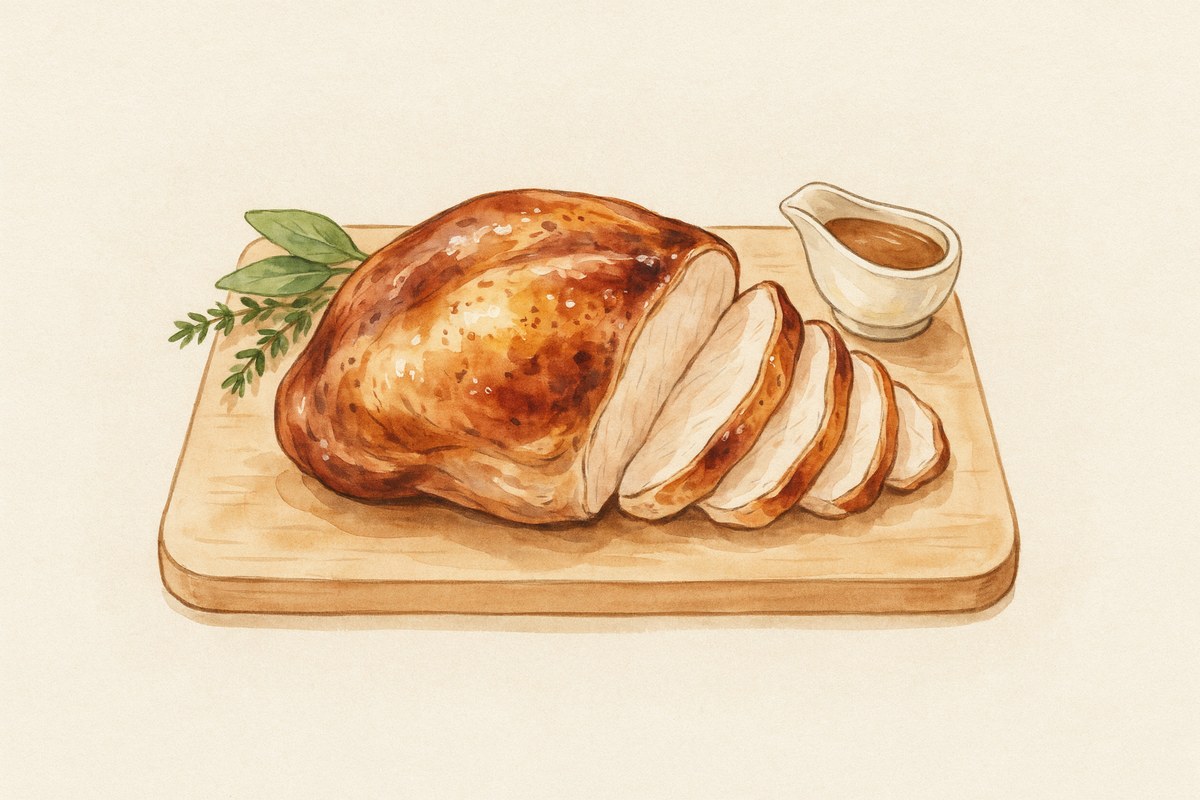
Roast Turkey Breast
A whole bone-in turkey breast, salted a day or more ahead and roasted hot-then-gentle until it's juicy, with crisp brown skin. You get all the holiday and none of the whole-bird wrestling, plus pan drippings for the gravy.

Ingredients
Before you start
Get these into the state the recipe asks for first — the steps that use them won't wait.
- The breast, salted one to three days ahead — the salt needs a day or more to sink in and dry the skin. Salted the same morning, it seasons only the surface (see the note if you're out of time)
Method
Cook's notes
Why 150°F and not 165°F? Poultry is safe from a combination of temperature and time, and a turkey breast holds its heat through a long rest. Pulled at 150°F, it finishes juicy instead of dry. The full explanation is in Kitchen Notes, including when to cook it further if you're feeding someone very young, elderly, pregnant, or immunocompromised.
Prefer a wet brine? That works too. Use the Chicken Brine, scaled up to cover the breast (its timing note covers turkey), and skip the salt here. Pat the breast very dry afterward so the skin still browns. The drippings come out saltier, so taste them before they go into the gravy.
Out of time to salt ahead? Salt it with the same amount right before it goes in. The surface will be well seasoned and the inside less so. It's still a good turkey, and the gravy helps.
Frozen breast? Thaw it in the fridge first, and allow about a day for every four pounds. That thaw comes before the salting days, so start early. Never thaw it on the counter.
A leave-in probe takes the guessing out. Set its alarm for 150°F and you don't have to open the oven to check. See the wireless probes in the Tool Kit.
Half or double. A split half breast cooks faster, so start checking soon after you lower the heat. For two whole breasts, use a big roasting pan and keep them from touching; the time is about the same, but check each one.
The gravy. The make-ahead turkey gravy is made days early from roasted wings, then finished on the day with the drippings from this pan.
The day after. Leftovers go into Betty's turkey tetrazzini or Claire's self-crust turkey pie. Sliced turkey keeps four days in the fridge, or freezes in a little gravy.
Cook's notes
Pot size. One roast fits a 6-quart pot. Two roasts (2×) need an 8-quart, or cook them one after the other. A whole bone-in breast is too wide across the ribs for most 6-quart pots, so that version is for the oven.
Why 150°F? Same reason as the roasted version: it finishes juicy on the rest. See Kitchen Notes.
Check the label. Skip the frozen roasts sold in a cook-in bag for the oven (they're meant to go straight from freezer to oven). You want a plain, thawed, skin-on roast.
Easier, if you like
- Buy it already cooked. A Butterball Fully Cooked Turkey Breast (bone-in, heat and serve; look in the frozen case around the holidays) or Costco's Kirkland Signature Turkey Breast, Oven Browned (in the deli case). Reheat it covered, with a splash of broth in the pan, following the package directions, and serve it with the gravy. A smaller meal is still a holiday.
Gluten-free; dairy-free as written (Plain)
Gluten-free: naturally gluten-free. Check the broth label.
Dairy-free: Plain is dairy-free. For the herb version, mash the herbs and garlic into a couple of spoonfuls of olive oil instead of the butter.