 Spare Spoons Kitchen
Reverse-Seared
Ribeye Steak
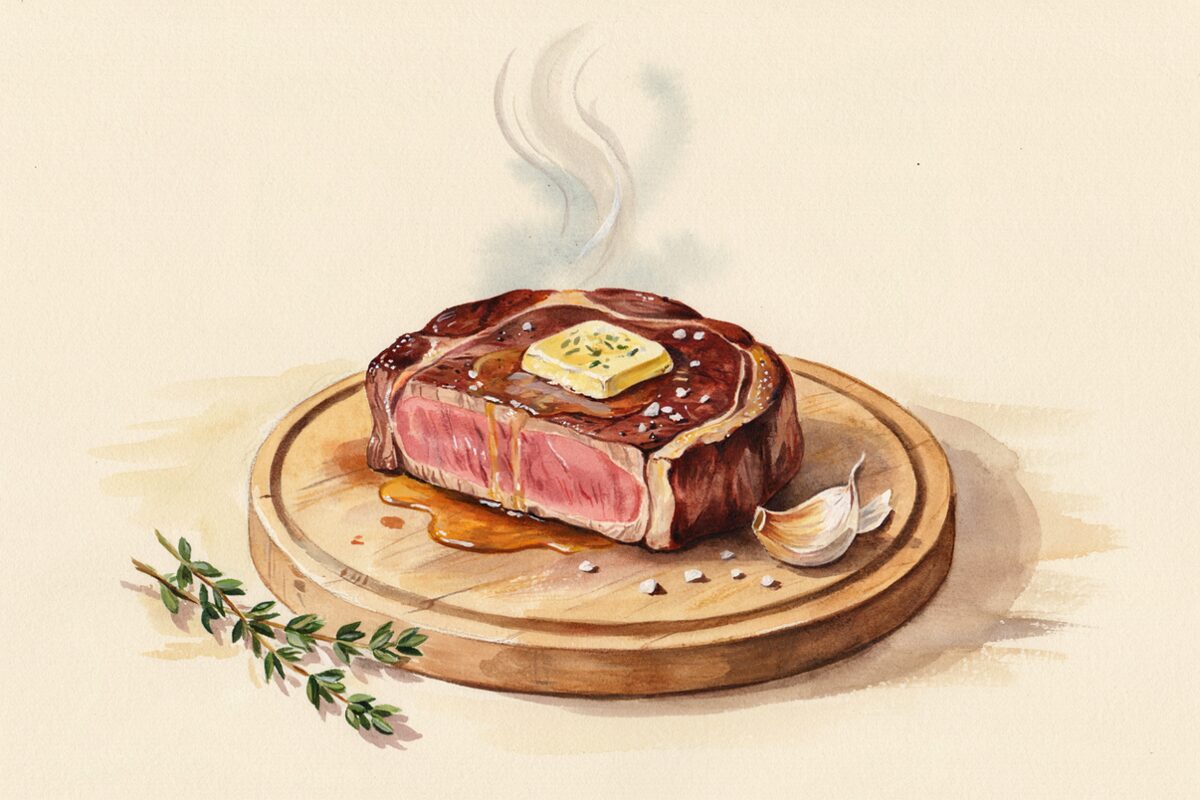
The most forgiving way to a perfect steak: a low oven brings it evenly to temperature, then a blistering cast-iron sear builds the crust — rosy edge to edge, no grey band, every time.

🍽️ Build a meal around this
Complete dinners built around this dish — pick how much of a project you're in the mood for. Every dish is on this site, and the whole menu goes to the Menu Planner in one tap.
Ingredients
Method
Cook's notes
Doneness by temperature — this is the whole game. Pull the steak from the low oven at the first number; the sear and the rest carry it up to the second.
• Rare: pull 105°F → 120–125°F final
• Medium-rare (the sweet spot): pull 115°F → 130–135°F
• Medium: pull 125°F → 140–145°F
• Medium-well: pull 135°F → 150–155°F
Carryover keeps climbing after the sear, so if you're between two, pull a touch early. A good instant-read thermometer is what makes this foolproof — see the Tool Kit.
Why reverse sear beats a straight sear on a thick steak. A hot pan alone overcooks a grey ring under the crust before the center is done. The gentle oven brings the whole steak evenly to just-under-target first, so the sear only has to brown the outside — you get an edge-to-edge rosy interior and a better crust, with far more margin for error.
A dry surface is the secret to the crust. Browning can't start until surface moisture boils off, so patting the steaks bone-dry before searing — and, better yet, dry-brining uncovered in the fridge — is what gives you deep color in under two minutes instead of a pale, steamed exterior.
This method is for thick steaks (1¼ inches and up). Thinner steaks don't have enough interior to protect, so they're better with a straight hot-pan sear — that's the Simplify this recipe version.
Bone-in or boneless? Both work. Bone-in (a cowboy or tomahawk ribeye) looks dramatic and the bone insulates slightly, so it may run a few minutes longer in the oven; boneless is easier to sear evenly and to slice. Go by temperature either way.
Dress it up: a coin of compound butter melting over the top, or a quick pan sauce from the drippings — deglaze with a splash of red wine or stock, swirl in a knob of cold butter.
Cook's notes
This straight sear is best for thinner steaks (¾–1 inch). For thick steaks (1¼ inches and up), the full reverse-sear method gives a better edge-to-edge result.
Use a thermometer: pull at 130°F for medium-rare — carryover brings it to about 135°F as it rests.
Easier, if you like
- No cast-iron pan? Any heavy stainless skillet that can take high heat works — just get it genuinely hot and don't crowd it. Avoid nonstick; it can't take the heat a good sear needs.
- Grill instead: reverse-sear on the grill by cooking the steaks over the cool side (lid down, ~250°F) to your pull temp, then searing over the hot side for the last minute or two a side.
- Skip the oven for a weeknight steak: a straight hot-pan sear is faster and perfect for thinner cuts — that's the Simplify version below.
Gluten-free as written; dairy-free and cut swaps
Gluten-free: nothing to change — steak, salt, pepper, and butter are all naturally gluten-free.
Dairy-free: skip the butter baste and finish the sear with a little more oil, or use ghee (clarified, so most people who avoid dairy tolerate it) or a plant butter.
Other cuts, same method: a New York strip behaves just like ribeye here. Leaner cuts (filet/tenderloin, top sirloin) reverse-sear well too, but pull them about 5°F earlier — with less fat they dry out faster. You can even reverse-sear a small single-bone rib roast this way; it just needs longer in the oven.