 Spare Spoons Kitchen
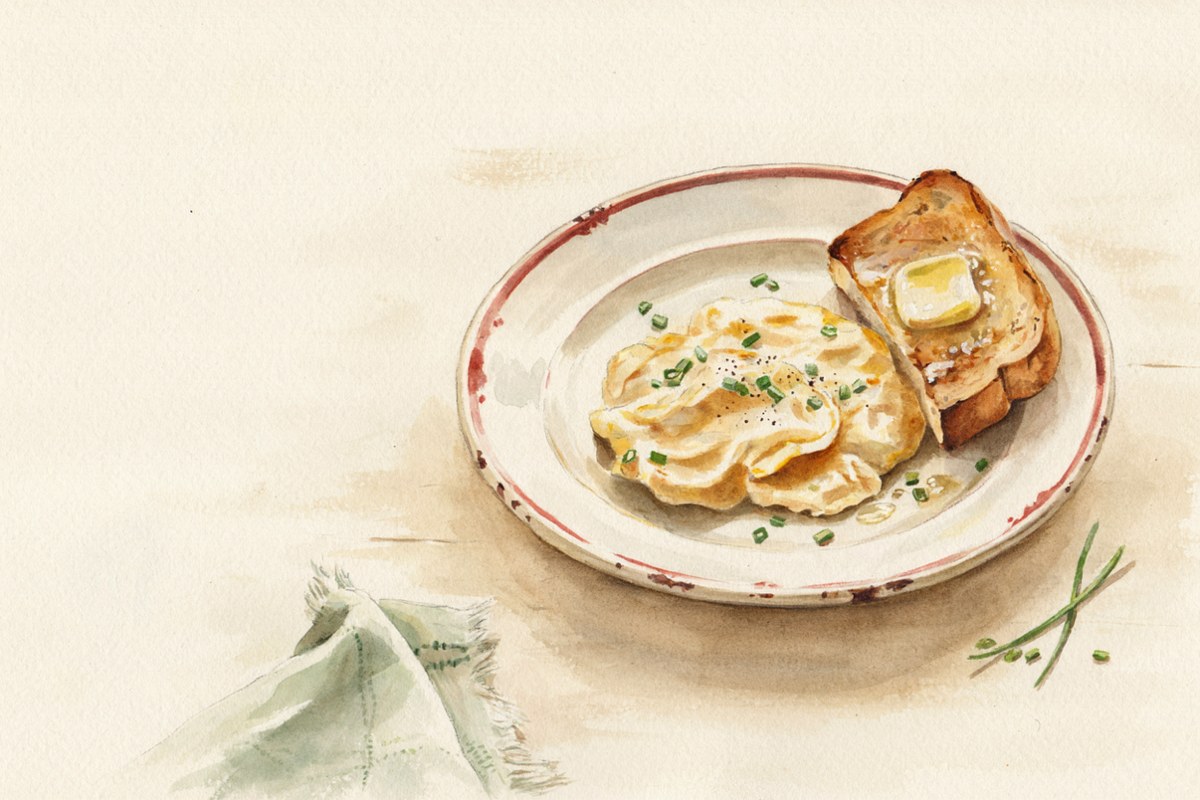
Scrambled Eggs
Creamy, low-and-slow scrambled eggs — the method that actually works.

Ingredients
Method
Cook's notes
The cold-pan method works because eggs start cooking gradually as the pan heats up, giving you time to develop large, soft curds without hitting the rubbery-texture threshold. A preheated pan skips that window entirely.
Never walk away. Scrambled eggs on low heat need constant attention — if you leave them for even 30 seconds, the bottom layer overcooks while the top is still raw.
Carryover heat finishes the job. Pull the pan off heat when they look slightly underdone — the residual warmth in the pan will finish them in about 30 seconds.
Fat matters. Butter adds flavor and richness. Olive oil works but the flavor is different. Avoid cooking spray here.
Scale note: for more than 3 servings, cook in two batches rather than crowding the pan. A crowded pan steams the eggs instead of scrambling them.
Easier, if you like
- Microwave mug version: crack 2 eggs into a large microwave-safe mug, add a splash of milk, scramble with a fork. Microwave on high 30 seconds, stir, 30 seconds more, stir again. Done when just barely set — they'll look wet but firm up fast.
Vegetarian and gluten-free as written
Dairy-free: use olive oil or a neutral oil instead of butter. The eggs will be slightly less rich but otherwise the same.
Vegan: a tofu scramble follows a similar low-and-slow method — crumble firm tofu into a cold pan with oil and a pinch of turmeric, cook on medium-low, stir often. Not the same thing, but good in its own right.