 Spare Spoons Kitchen
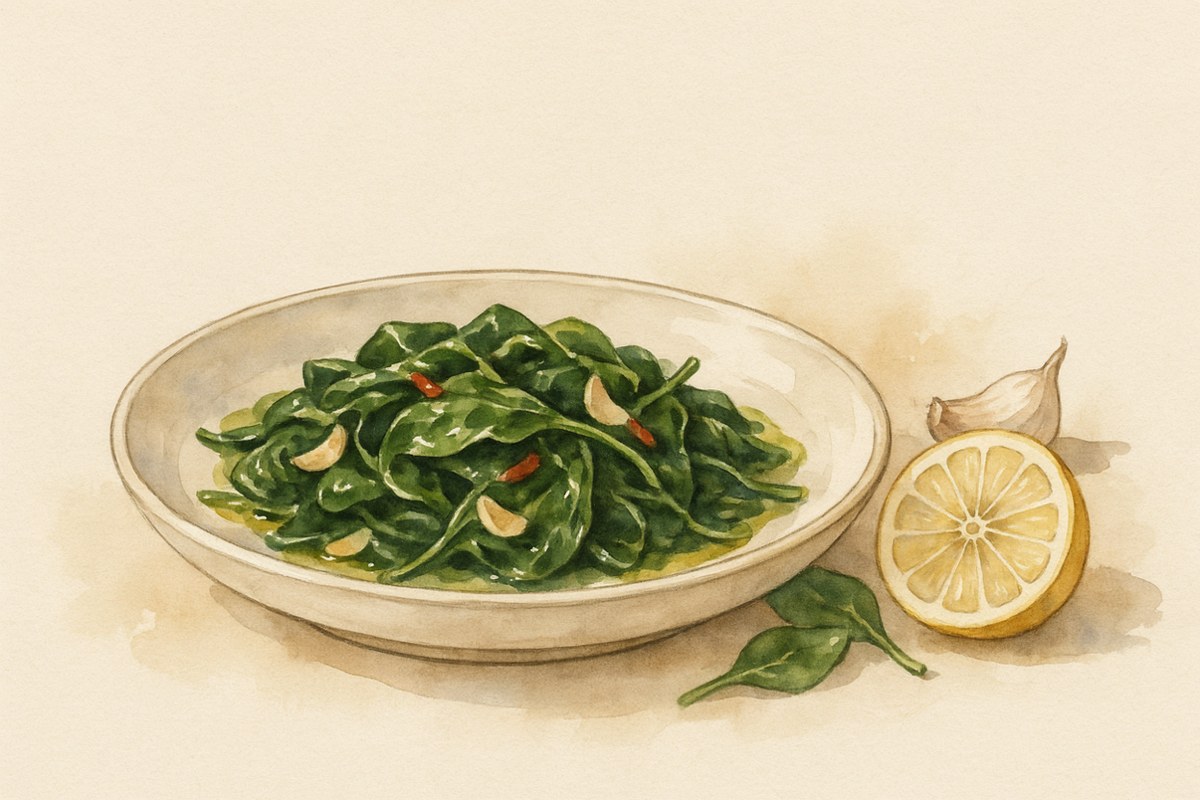
Sautéed Spinach
Garlic, olive oil, lemon, five minutes — the fastest green vegetable there is, and the one that actually tastes like something.

Ingredients
Method
Cook's notes
Biggest pan you own. A crowded pan steams; a wide one lets the water evaporate as it comes out. If your largest skillet still won't hold it, add the spinach in two handfuls, letting the first wilt before the second goes in.
Lift it out, don't pour it out. There will be a pool of green liquid in the bottom of the pan no matter what you do. Tongs leave it behind; tipping the pan onto the plate brings it along and makes a puddle.
Lemon at the end is not optional. Spinach without acid tastes flat and faintly metallic. The lemon is what turns it from a health obligation into a side dish.
Frozen spinach works — thaw it and squeeze it hard in a clean kitchen towel until no more water comes out, then skip straight to the wilting step and just heat it through. Under-squeezed frozen spinach is the usual reason this dish comes out soupy.
What it goes with: almost anything — eggs, pasta, chicken, salmon, and particularly brown-butter scallops, where its acidity cuts the butter. Other fast greens on the site: charred broccolini, simple asparagus, and sautéed broccoli rabe.
It does not keep well. Cooked spinach goes dark and weeps in the fridge. Make what you'll eat, or plan the leftovers into an omelet or a pasta the next day.
Easier, if you like
- Pre-washed baby spinach in a bag — produce section, nothing to trim, nothing to wash. Mature bunched spinach needs stemming and a proper wash in two changes of water, which triples the work for a marginal gain.
- Jarred chopped garlic is fine here; add it to the oil off the direct heat so it can't catch.
Vegan and gluten-free as written
Vegan: already vegan.
Gluten-free: naturally gluten-free.
Heartier greens: chard cooks the same way with a couple of extra minutes (separate the stems and start them first). Kale wants longer and a splash of water in the pan, covered, to soften.
Add-ons: a handful of raisins and toasted pine nuts makes it Catalan; a scrape of nutmeg and a spoon of cream makes it creamed spinach; a grating of parmesan at the end (no longer vegan) is never wrong.