 Spare Spoons Kitchen
Overnight Focaccia
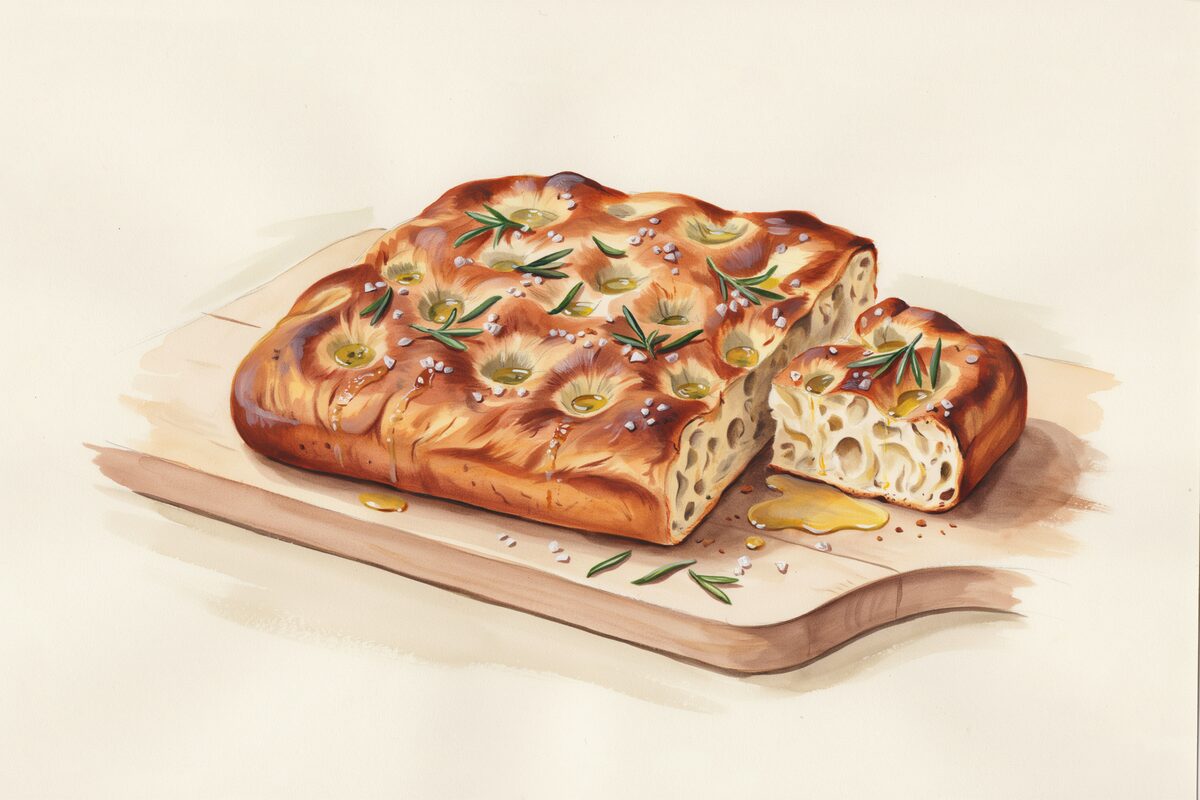
A high-hydration focaccia with a crisp, olive-oil-rich bottom and an airy, dimpled crumb. No kneading — just a long, cold overnight rise that does the work for you. Hands-on time is minutes; the fridge does the rest.

Ingredients
Method
Cook's notes
Hydration is the point — the wetter the dough, the more open the crumb. Resist adding flour; oiled hands handle it easily.
Cold and slow beats warm and fast for flavor; you can stretch the fridge rise to a second day.
What to proof it in: a clear, straight-sided dough bucket with a lid is what makes the overnight cold rise easy — you can watch the dough climb the walls, and the smooth sides let this wet dough slide out without deflating. A 4-quart holds this batch comfortably.
Topping it — the one rule is timing. Sturdy toppings go on right after you dimple, pressed down into the oily dimples so they don't slide off, and bake with the bread: halved cherry tomatoes (cut-side up), pitted olives, thin-sliced red onion, whole rosemary leaves. Cheese and delicate things come later — crumble feta on before baking for a little color, or in the last 10 minutes to keep it creamy and white; add fresh basil, a drizzle of good olive oil, or more herbs after it comes out. Two cautions: pat wet toppings (tomatoes especially) fairly dry so the crumb crisps instead of steaming, and don't overload: aim for a barese scatter — tomatoes and olives studded generously but evenly across the top, the dough still peeking through between them, the way they dress a focaccia barese down in Puglia (after Bari) — not a sparse handful, and never a solid blanket, which weighs a light dough down.
The one to start with — Mediterranean (tomato, olive & feta). Flip the Toppings switch above the ingredients to add the set (amounts scale with the pan). Then: press the tomatoes (cut-side up), olives, and onion into the dimples with the rosemary leaves and flaky salt, and bake. Crumble the feta on for the last 10 minutes so it stays creamy, and finish out of the oven with a drizzle of olive oil and a few torn basil leaves. (The feta makes it no longer vegan — leave it off to keep it so.)
Other toppings, same idea: mandolined thin potato slices (pressed in — they crisp beautifully); caramelized onions spread on before baking; halved grapes with rosemary for a sweet-savory schiacciata; garlic as slivers pushed deep into the dimples or as confit cloves, since raw garlic scorches at 450°F; parmesan in the last 5 minutes. Anything green and delicate — basil, arugula — goes on after baking.
Provenance: adapted from Helen Rennie's focaccia method.
Leftovers split and toasted make excellent sandwich bread.
Easier, if you like
- Same-day: rise warm 2 hours instead of overnight — quicker, a little less flavor.
Vegan as written
Vegan: it already is — flour, water, yeast, salt, olive oil.
Note on gluten: this is a wheat-bread recipe; gluten-free focaccia needs a different formula (a GF bread flour blend with psyllium), not a simple swap.