 Spare Spoons Kitchen
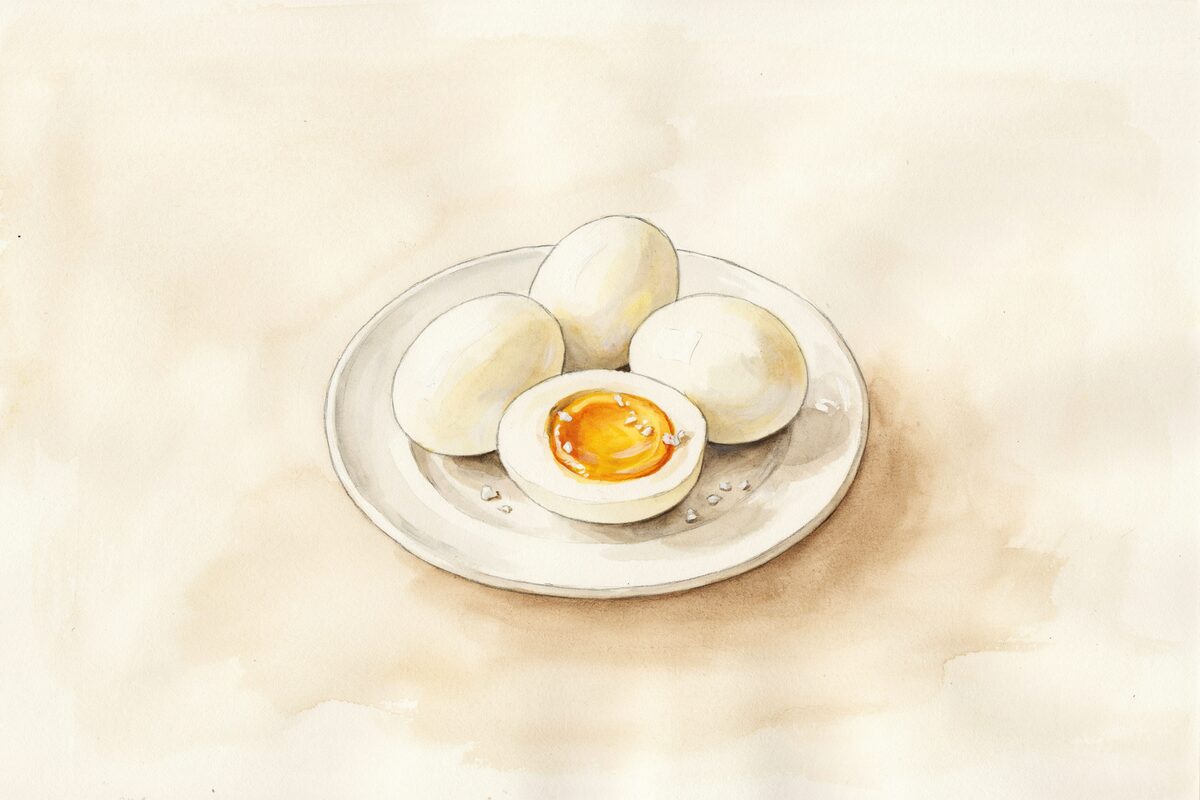
Boiled Eggs
A foolproof method that works every time: temper cold eggs in hot tap water, boil exactly 1 minute, then let residual heat do the rest. Soft, jammy, or hard — your call.

Ingredients
Method
Cook's notes
Why room-temp water, not ice? Ice water stops the cooking faster, but it also firms the white and makes the egg harder to peel cleanly. Room-temp water stops the cooking gradually — still effective, easier to peel.
Why temper first? Cold eggs crack when they hit boiling water — the sudden temperature shock can fracture the shell before the egg has a chance to cook. The hot-tap-water soak reduces that risk by about 95% (my estimate — it's not foolproof, but it's close). It also helps the egg cook more evenly.
Altitude matters. At high elevation, water boils at a lower temperature. Add 30–60 seconds to your rest time if you're above 5,000 feet.
Fresh vs. older eggs. Very fresh eggs are harder to peel — the membrane clings. Eggs that are 1–2 weeks old peel more cleanly. For deviled eggs or egg salad, slightly older eggs are easier to work with.
For deviled eggs: use the 7-minute hard-boiled method. Let them cool completely before peeling and slicing.
Easier, if you like
- Instant Pot: place eggs on the rack, 1 cup water, 5 minutes High Pressure, 5-minute natural release for hard-boiled. The IP method is reliable but takes longer to start (pressurize). Worth it for a large batch.
- Make ahead: hard-boiled eggs keep in the fridge unpeeled for 5 days. Peel right before eating — peeled eggs dry out faster.
Naturally vegetarian and gluten-free
Vegan: no substitute exists — this is eggs. For a vegan jammy-yolk effect, look at marinated tofu slices (soy, mirin, a little sesame oil).