 Spare Spoons Kitchen
Potato Gnocchi
from scratch
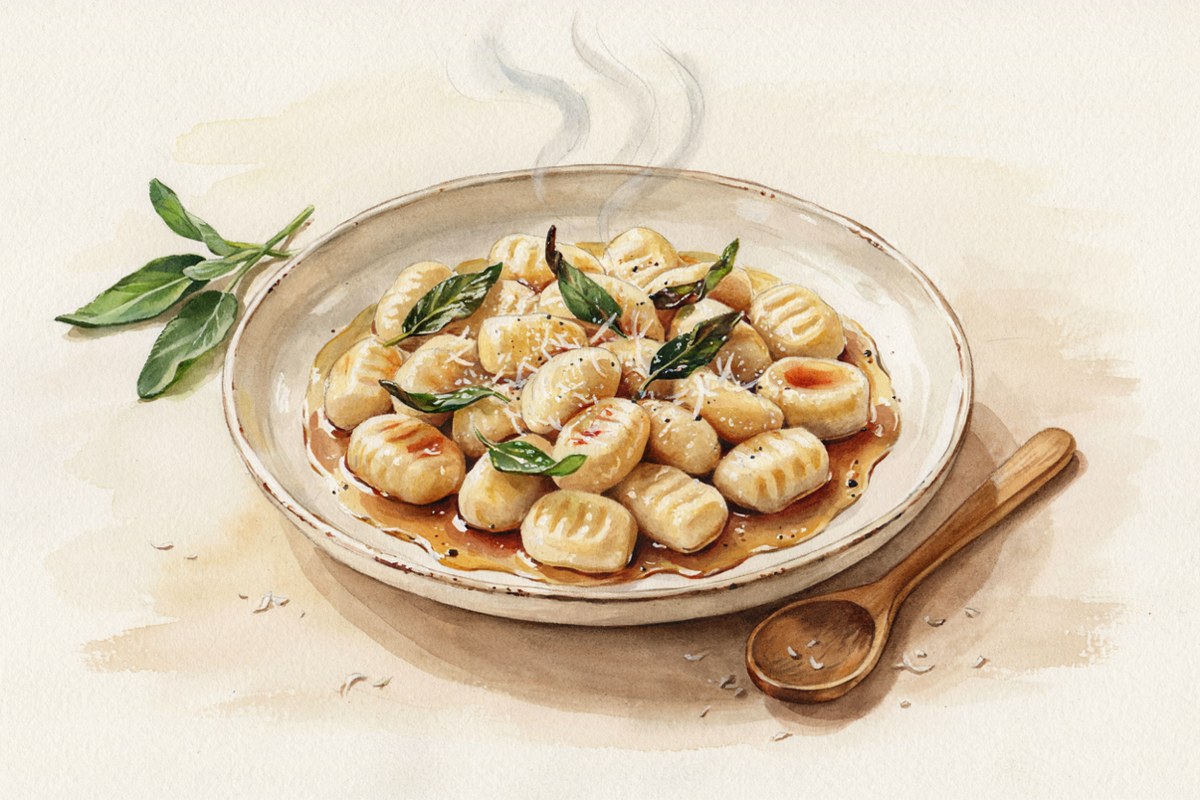
Tender little potato dumplings, made the real way — baked russets riced while hot, worked with just enough flour and an egg yolk, rolled, cut, and boiled until they bob to the top. Finished in nutty browned butter and crisp sage. A project, but a calm, repetitive one, and worlds apart from the gummy store kind.

Ingredients
Method
Cook's notes
Bake, don't boil. Boiled potatoes soak up water, and wet potato needs more flour to hold together — which is exactly how gnocchi turn gluey. Baked russets stay dry and floury, so you can keep the flour low and the pillows tender. (No time to bake? Microwave the pricked potatoes 8–12 minutes, turning once, until soft.)
Egg or no egg. Purists leave the egg out for the most delicate gnocchi; a yolk makes the dough more forgiving and the pillows a touch sturdier — worth it the first few times. Without the yolk you lose some binding, so expect to work in a little more flour to hold the dough together (this is why traditional eggless recipes often run higher, toward 250–300 g per kilo of potato) — but add it by feel, and lean on the one-gnocco boil test.
The freezer is your friend. Raw gnocchi freeze beautifully: spread them on a floured tray so they don't touch, freeze until solid, then tip them into a bag. Cook straight from frozen — don't thaw — and just add a minute to the boil. Make a double batch and bank a low-spoons dinner.
Other sauces. Browned butter and sage is the classic, but gnocchi are lovely with a simple tomato sauce, a spoon of pesto, or baked alla sorrentina — tossed with tomato and torn mozzarella and run under the broiler until bubbling.
Test one first. Before you cut the whole batch, boil a single gnocco. If it dissolves, work a little more flour into the dough; if it is dense and rubbery, you've gone too far — go a touch lighter next time. That one test saves the batch.
Easier, if you like
- Skip the shaping. The ridges are traditional but optional — plain cut pillows cook and taste exactly the same; the fork is purely for sauce-clinging. On a lower-spoon day, just roll, cut, and boil.
- A ricer earns its drawer space here — it is the one tool that makes gnocchi easy and reliably fluffy (see the Tool Kit). No ricer? Push the potato through the large holes of a box grater, or mash very well and fluff with a fork — just avoid a food processor, which turns potato gluey.
- Store-bought is a fine shortcut for a busy night — a package of shelf-stable or refrigerated gnocchi, boiled or crisped in a skillet, takes the same browned-butter-and-sage finish. Not as tender as scratch, but a good weeknight stand-in.
Notes on going vegan and gluten-free
Vegan: leave out the egg yolk (traditional anyway) and finish with olive oil or vegan butter plus a little pasta water instead of dairy butter; skip the Parmigiano or use a vegan hard cheese. The dough is a touch more delicate without the yolk, so handle it gently.
Gluten-free: a 1:1 gluten-free flour blend works, though the dough is more fragile — keep the potatoes very dry, add flour sparingly, and shape gently. Expect a softer pillow.