 Spare Spoons Kitchen
Pesto Rosso
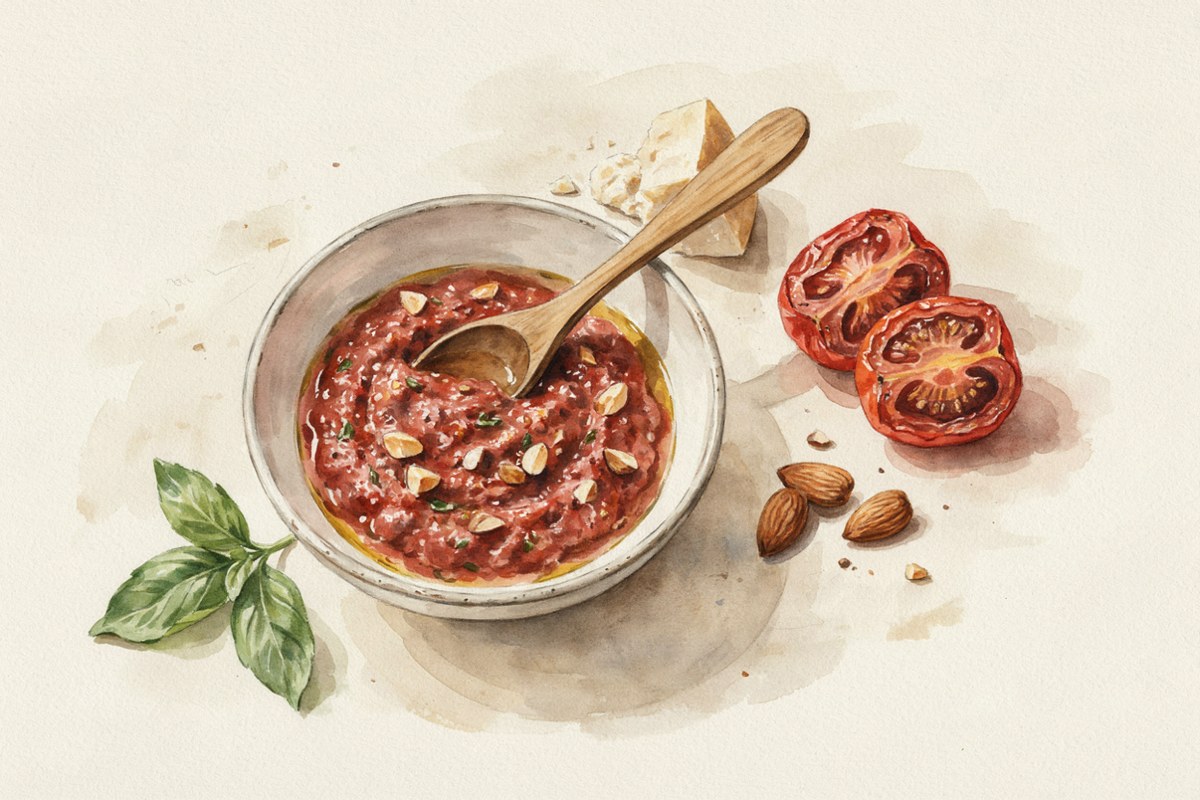
Red pesto: slow-roasted tomatoes pulsed with toasted almonds or pine nuts, garlic, Parmigiano and basil, loosened with olive oil. It's sweeter and softer than the usual sun-dried version, and it goes on pasta, into sandwiches, under a piece of fish, or onto a cracker straight from the jar.

Ingredients
Method
Cook's notes
The red cousin of basil pesto. Pesto just means pounded, and pesto rosso is the red version of the Genoese green one (pesto alla genovese). Most recipes use sun-dried tomatoes. Slow-roasted ones make a softer, sweeter, brighter pesto.
Almonds or pine nuts? Choose either under Nuts, above the ingredient list, and the list changes to match. Almonds give a coarser, toastier pesto and point it toward Sicily, where tomato-and-almond pesto alla trapanese comes from. Pine nuts make it softer and richer, closer to the Genoese original. They cost more and burn faster, so toast them over a watchful eye.
Make the tomatoes first. This uses slow-roasted tomatoes: about three hours in a low oven, but only fifteen minutes of your time. A single tray is enough for this pesto and a pasta dinner.
Turning a whole tray into pesto. One tray of slow-roasted tomatoes is twelve tomatoes, the way a box of romas is often sold, and that is exactly a triple batch. Choose 3× at the top and every amount changes to match. It makes about three cups, which is too much for a mini chopper: use a full-size food processor, or make it in two rounds. Freeze what you won't use this week.
On pasta. Stir the pesto into drained pasta off the heat with a splash of the pasta water, which loosens it into a sauce that coats. Never cook it in a hot pan; the cheese clumps and the basil goes dark. About a cup of pesto sauces a box of pasta.
Other ways to use it: spread it on a sandwich or a grilled cheese, spoon it over grilled chicken or a piece of salmon, swirl it into a bowl of soup or white beans, or stir it into ricotta for a dip.
Keeping it. Pack it into a jar, smooth the top, and pour on a thin layer of olive oil to keep air off it. It keeps in the fridge for up to five days. For longer, freeze it in an ice-cube tray, then move the cubes to a bag; they keep for about three months and thaw in minutes.
Easier, if you like
- Sun-dried instead of slow-roasted. For the classic version, use a jar of Mezzetta Julienne Cut Sun-Ripened Dried Tomatoes in olive oil (near the olives and jarred peppers). Drain them, use about half a jar in place of the roasted tomatoes, and use the oil from the jar for some of the olive oil. It comes out more intense and a little sharper.
Vegetarian and gluten-free; easy to make vegan or nut-free
Vegan: leave out the Parmigiano and add a heaping tablespoon of nutritional yeast and a pinch more salt.
Nut-free: toasted sunflower seeds or pepitas, toasted the same way, in place of the almonds.
Walnuts work too, toasted the same way as the almonds. They make the pesto a little more bitter.