 Spare Spoons Kitchen
Lemon Vinaigrette
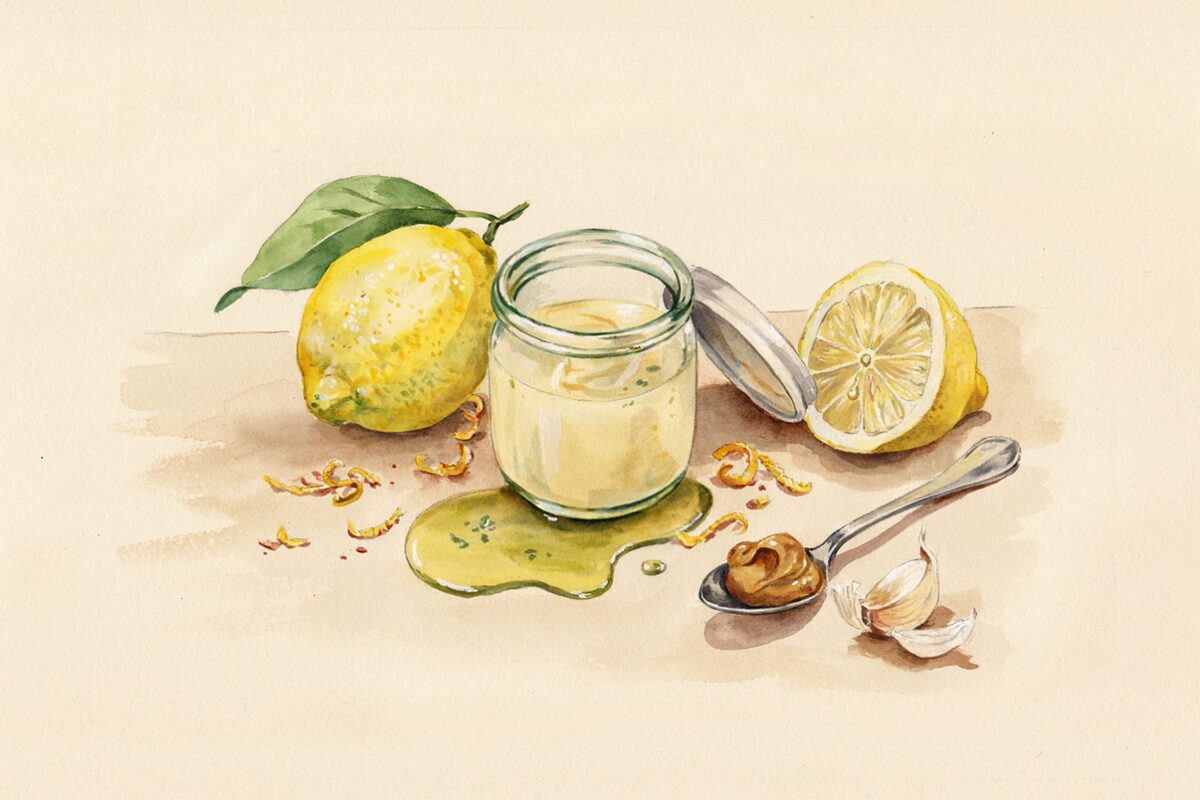
Lemon, good olive oil, and a spoon of Dijon shaken in a jar — a bright, creamy dressing in five minutes that ruins bottled for you permanently.

Ingredients
Method
Cook's notes
The Dijon is the glue, not a flavour. Oil and lemon juice don't mix; mustard is an emulsifier, so it holds them together in suspension long enough to eat. Leave it out and the jar separates before it reaches the table. One teaspoon does the job without tasting of mustard.
Fresh lemon, and no arguing about it. Nothing here gets cooked, so there's nowhere for a shortcut to hide — bottled juice tastes flat and gives you no zest, which is where most of the lemon smell comes from. This is one of the few places on this site where we'd tell you to go to the shop.
The ratio is yours. This is 2 parts oil to 1 part lemon — bright and sharp, on purpose. The classic French vinaigrette is 3:1; for that, go up to ¾ cup (180 ml) of oil. Add it a splash at a time and taste as you go. Sharper cuts through rich food; milder is friendlier on a plain green salad.
It will separate, and it isn't broken. Give it 20 seconds in the jar and it comes back every time. Keeps a week in the fridge — where good olive oil goes cloudy and semi-solid, which is a sign it's good olive oil. Leave it on the counter 10 minutes, then shake.
Make it your own: a finely minced shallot (steeped in the lemon for 10 minutes first, which takes its bite off) · 1 tsp honey or maple to round the edge · a handful of chopped soft herbs · a spoon of grated parmesan for a Caesar-adjacent version.
Where it goes: any green salad, the pear, apple and fennel salad, over steamed broccoli while it's still warm, on roast chicken thighs, or spooned over white beans with a little parsley for a five-minute lunch.
Easier, if you like
- The jar is the shortcut. No whisk, no bowl, no drizzling oil in a thin stream while you whisk with the other hand. You shake it, and it stores in the same jar you made it in — nothing to wash but a lid.
- One cube of frozen crushed garlic (Dorot, freezer aisle) drops straight in and saves the peeling and the board — it's raw garlic, so it holds up here.
Naturally vegan, vegetarian, and gluten-free
Vegan / vegetarian / gluten-free: lemon, oil, mustard, garlic — naturally all three as written. (If you sweeten it, use maple rather than honey to keep it vegan.)
No Dijon? Whole-grain mustard works and looks handsome; yellow mustard will emulsify but tastes of yellow mustard. A teaspoon of mayonnaise is the emergency emulsifier — it's mostly egg yolk, which does the same job.