 Spare Spoons Kitchen
Lemon Posset
Three ingredients, ten minutes, and no eggs, gelatin, or oven — lemon juice sets hot cream into a dense, cool, intensely lemony cream you make the day before.

Ingredients
Before you start
Get these into the state the recipe asks for first — the steps that use them won't wait.
- Lemons zested first, then juiced, and the juice strained — you cannot zest a squeezed lemon, and a seed in the pot means straining twice
- Four ramekins, small glasses, or teacups lined up — the mixture has to be poured while it is still hot and loose
Method
Cook's notes
Why it sets: lemon juice drops the pH of the cream far enough that the milk proteins link up, and the boil concentrates the fat enough for that mesh to hold. It is the same chemistry as ricotta, stopped much earlier. That is also why low-fat cream fails — there is nothing for the mesh to hold on to.
Bottled lemon juice is the usual failure. It is weaker and differently acidic than fresh, and it tastes of the bottle in a dessert that is mostly lemon. Zest and juice real lemons.
Small portions. This is very rich — small ramekins, small glasses, or espresso cups are the right size. A big bowl of it defeats everyone.
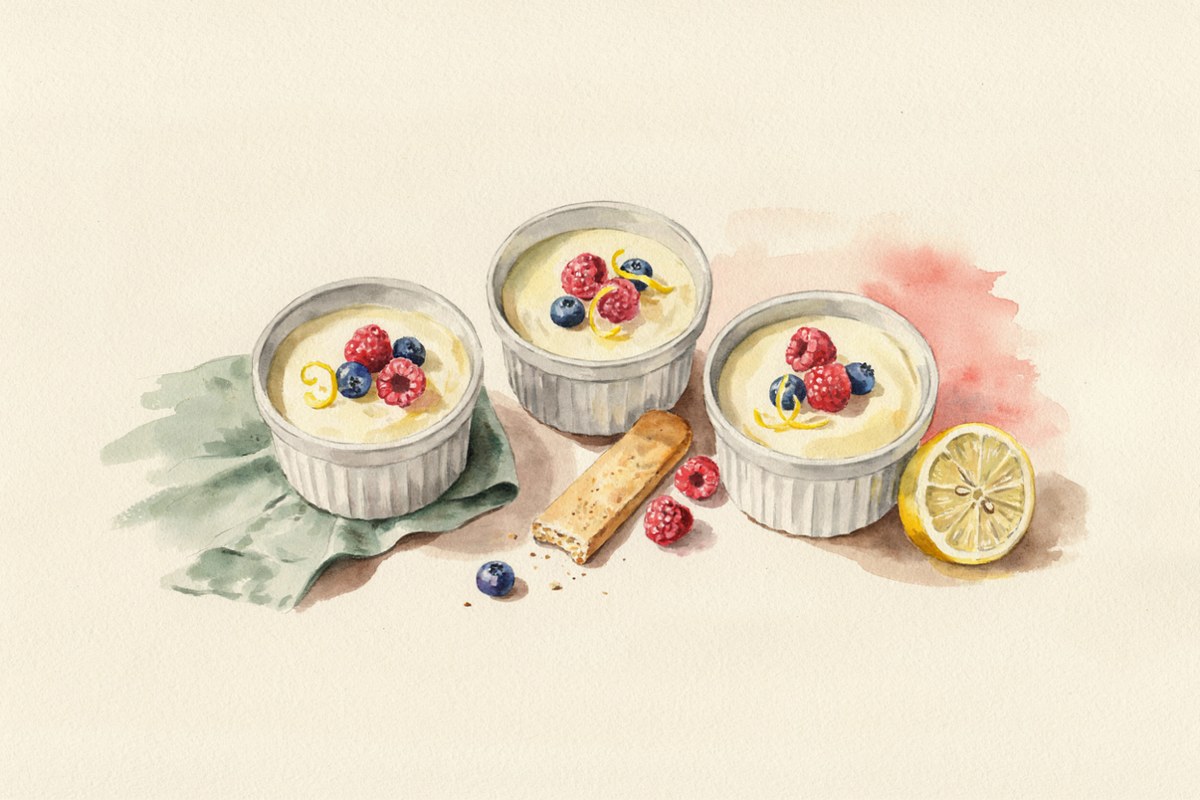
It wants something sharp or crunchy alongside. Raspberries, blueberries, a thin shortbread, or a spoon of barely sweetened whipped cream all cut the richness.
What it goes with: it is the dessert I would put after brown-butter scallops — made the day before, it keeps the oven and the stove free on the night.
Make ahead: keeps 3 days covered in the fridge and is better on day two. It does not freeze — it goes grainy.
If it does not set: the cream did not boil hard enough or long enough. It is still delicious poured over berries or frozen into a very good lemon ice.
Easier, if you like
- Skip the ramekins and set it in one shallow serving dish, then spoon it out at the table. It sets a little faster in a wide dish than in deep cups.
- Buy the crunch — Walkers Pure Butter Shortbread Fingers, in the cookie aisle, are exactly right alongside and need no baking.
Vegetarian and gluten-free; there is no good dairy-free version
Gluten-free: naturally gluten-free — check any cookie you serve with it.
Vegetarian: yes, and unusually for a set dessert it uses no gelatin at all.
Dairy-free: there isn't an honest swap here. Coconut cream will not set this way, because the mechanism depends on dairy proteins. Make a coconut panna cotta instead.
Citrus swaps: lime works at the same volume and is excellent; pink grapefruit and blood orange are not acidic enough on their own — replace only half the lemon juice with them.