 Spare Spoons Kitchen
Hamburger
Buns
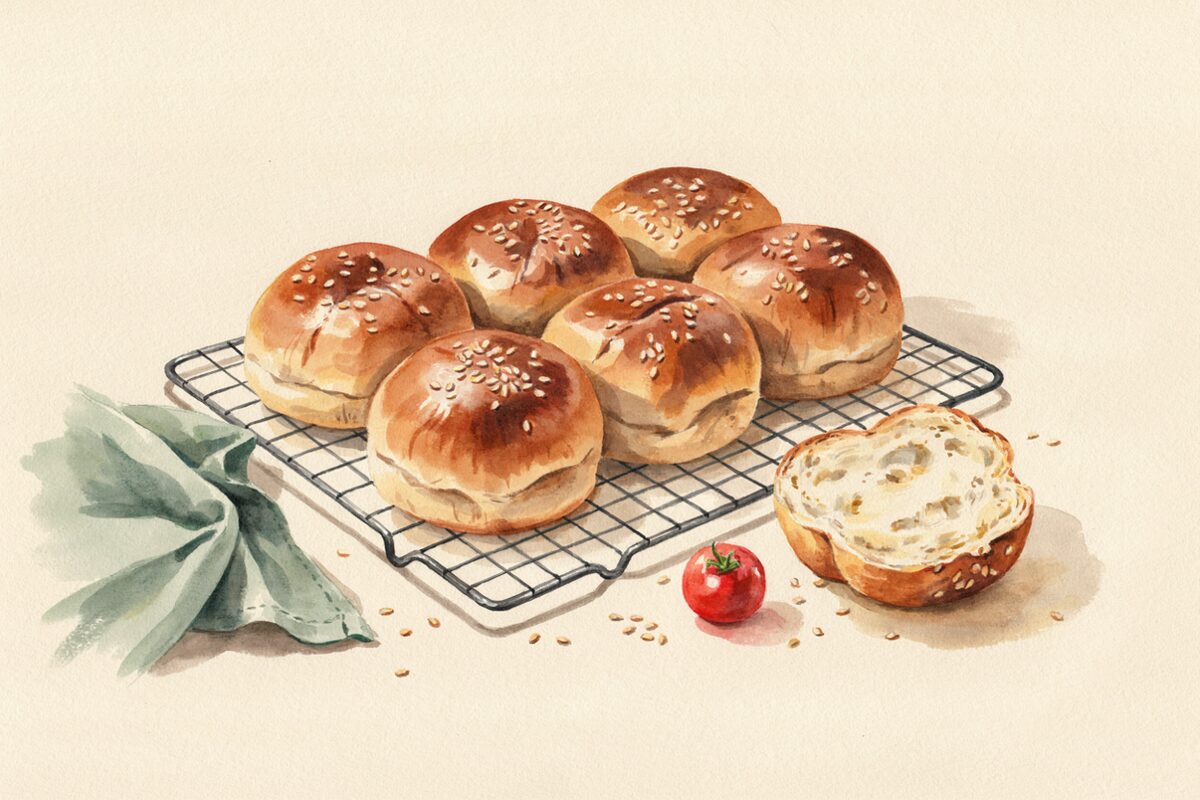
Soft, faintly sweet burger buns enriched with milk, butter, and eggs — sturdy enough to hold a proper burger without going to pieces, but tender enough that they don't fight you. About three and a half hours start to finish, most of it rising while you do something else. They freeze beautifully, so one afternoon covers several dinners.

Ingredients
Method
Cook's notes
On the flour, and why it's a range. Enriched doughs vary — flour brands absorb differently, eggs differ in size, and a humid kitchen changes everything. Rather than committing to one number and hoping, start at 360 g and hold up to 60 g in reserve. Add it only after five minutes of kneading, a tablespoon at a time, and only if the dough genuinely won't gather. Most days you'll use little or none of it. The finished dough should feel like a soft earlobe and leave your hands only slightly tacky.
Why the butter goes in late. Fat coats flour proteins and slows gluten from forming, so butter added at the very start gives you a dough that never develops properly. Mixing the flour, liquid, and eggs first lets the gluten get going; the butter then enriches a structure that already exists. It's the same logic behind brioche, and it's the single biggest difference between a tender bun and a dense one.
Bread flour or all-purpose. Bread flour has more protein, which is what gives these buns enough chew to survive a juicy burger. All-purpose works and makes a softer, more cake-like bun — expect slightly less rise and a less resilient crumb. If all-purpose is what you have, use it; just handle the dough a little more gently.
Sweetness is adjustable. 50 g of sugar gives a distinctly sweet, brioche-leaning bun — lovely with a plain beef patty, and very good for pulled pork. Halve it to 25 g for something more neutral, or leave it out entirely. Two things to know if you cut it right back: the buns brown more slowly (watch the colour, not the clock), and the crumb will be a touch less soft, since sugar holds moisture.
Active dry versus instant. Both work at the same weight. Active dry benefits from the warm-milk proof in step one; instant (or "quick rise") can go straight into the flour and will move perhaps 15 minutes faster. If your yeast has been in the cupboard a while, proof it either way — it costs ten minutes and saves an afternoon.
Shaping is what makes them tall. A bun that spreads flat was shaped loosely. Dragging the ball across an unfloured patch of counter builds surface tension, and that taut skin is what forces the rise upward. Flattening them slightly before the second rise sounds counterproductive but gives you the flat-topped burger shape rather than a dome.
Doneness. Deep golden all over and 190°F (88°C) in the middle. Pale buns are underbaked and go gummy as they cool. If they're colouring too fast before the inside is done, tent them loosely with foil for the last few minutes.
Make-ahead and freezing. The shaped buns can go into the fridge overnight after shaping — take them out an hour before baking to finish rising. Baked, they keep two days in a bag at room temperature and freeze beautifully for three months. Freeze them whole, and refresh from frozen in a 300°F oven for about 10 minutes; they come back remarkably close to fresh.
Egg wash alternatives. Egg and water gives shine and helps the seeds stick. Egg yolk with a splash of cream gives a deeper, glossier brown. A brush of plain milk gives a softer, matte finish and a more tender crust — nice if these are for children or for anyone who finds a shiny crust unpleasant to touch.
Easier, if you like
- Let the mixer do it. A stand mixer with a dough hook handles the kneading entirely, which turns this from a physical job into a waiting job — much friendlier on a low-energy day.
- Split it across two days. Make and shape the dough one evening, refrigerate the shaped buns overnight, and bake them the next day. The cold rise even improves the flavour.
- Bake once, eat four times. A full batch freezes perfectly, so the three hours buys you buns for several meals rather than one.
- Don't own a scale? Divide the dough in half, then each half in half, then each quarter in half. Eight even pieces without weighing anything.
Vegetarian; easily dairy-free
Dairy-free: any unsweetened plant milk works in place of the milk, and a good plant butter in place of the butter. Oat milk gives the closest result.
Egg-free is a stretch here — the eggs are structural, not incidental — but you can brush the tops with milk or plant milk instead of the egg wash without changing the dough at all.
Gluten-free: not a swap I'd recommend. Enriched yeasted doughs depend on gluten for their whole structure, and a 1:1 blend gives a very different, much denser result.