 Spare Spoons Kitchen
Grilled
Cheese
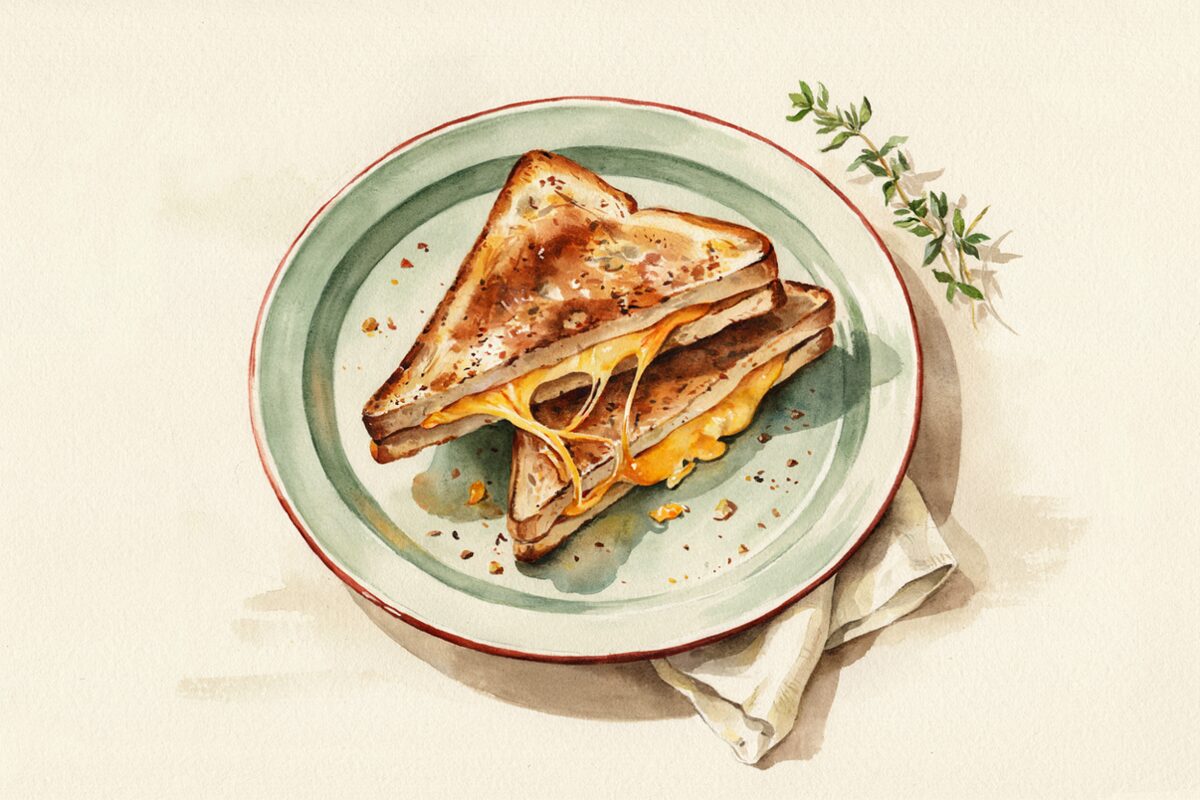
The mayo-on-the-outside method: browns evenly, never tears the bread, and is much harder to burn than butter. Lid on for the first side so the cheese melts before the crust overshoots. A ham & cheese variation is one fold away.

Ingredients
Method
Cook's notes
Why mayo instead of butter: it spreads straight from the jar without tearing bread, it browns more evenly (the egg in it helps), and it has a higher smoke point, so the window between golden and burnt is much wider. It does not taste like mayonnaise once toasted — it just tastes like a better crust.
Butter still works. If you'd rather: use softened butter, same amounts, and watch a little more closely — butter browns faster at the edges.
Cheese guidance: American melts creamiest and most forgiving. Sharp cheddar tastes best but can go slightly greasy on its own. The mix — one slice of each — gets you both. Pre-shredded also works: about ½ cup per sandwich, piled slightly away from the edges.
The ham move: for a ham & cheese, put cheese on both sides of the ham — cheese, ham, cheese. Melted cheese is the glue; ham touching bare bread slides out on the first bite. Full details in the variation below.
The full diner combo: grilled cheese, a bowl of tomato soup, and a cold pickle spear on the plate. The "Cold Open" Tomato Soup is a dump-and-go Instant Pot match, and the pickle isn't garnish — the cold, sour crunch resets your palate between rich, buttery bites. All three together is the complete experience.
Easier, if you like
- Feeding more than one? Use the oven. Heat the oven to 450°F with a sheet pan inside. Assemble the sandwiches (mayo outside, as written), lay them on the hot pan, bake 5–6 minutes, flip once, then 4–5 minutes more until golden. Two to six sandwiches, one flip, no standing at the stove — and plain and ham versions can share the pan.
Ham & cheese variation + diet swaps
Grilled ham & cheese: add 45 g thin-sliced deli ham (2–3 slices) per sandwich. Build it cheese–ham–cheese so the melted cheese glues the ham to both slices of bread. Everything else — heat, lid, timing — is identical; the ham just warms through.
Gluten-free: use whatever GF sandwich bread you already trust — same method. GF bread browns a touch faster, so check the first side at 3 minutes.
Vegan: vegan mayo works exactly the same on the outside, and the lid-on step is precisely what plant-based cheese needs to actually melt. Give the first side an extra minute.