 Spare Spoons Kitchen
Green Bean
Salad
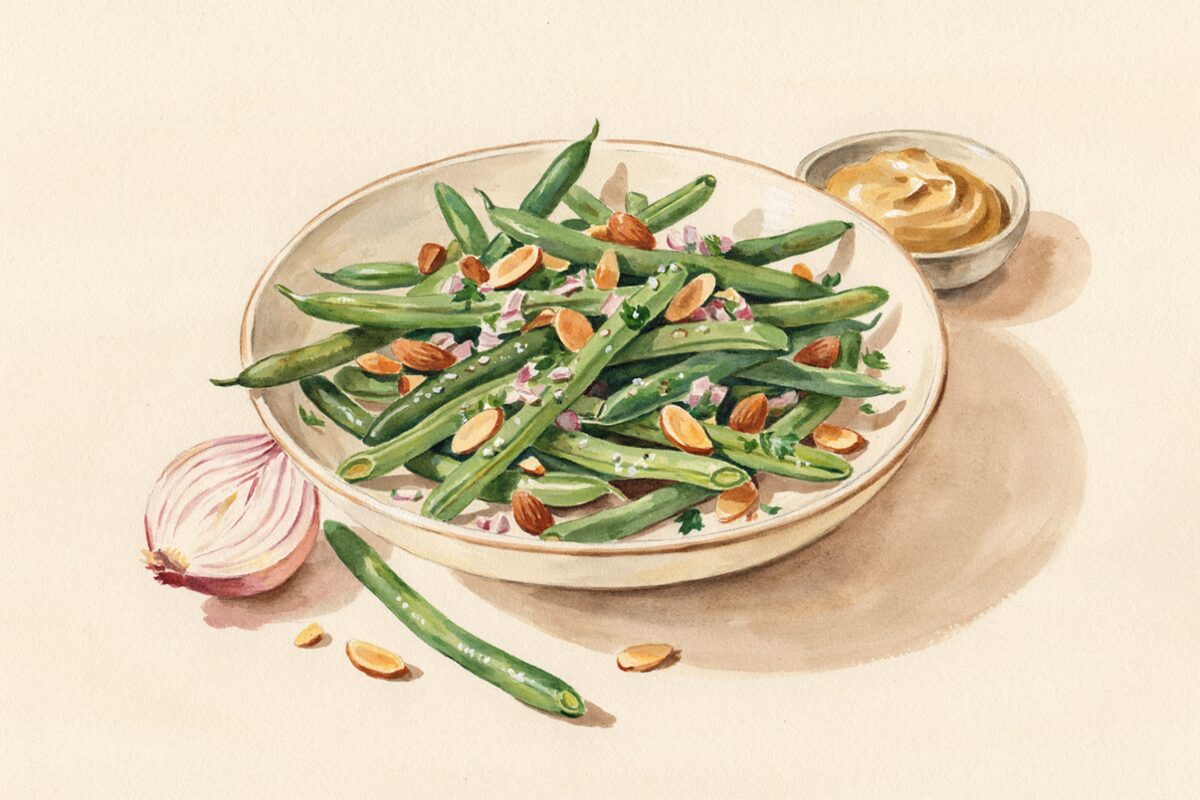
Crisp-tender green beans in a sharp shallot-and-Dijon vinaigrette, with toasted almonds for crunch. It's a cold side that improves as it sits rather than wilting, which makes it the rare salad you can finish hours before anyone arrives — and its acidity is exactly what a plate of rich barbecue wants beside it.

Ingredients
Before you start
Get these into the state the recipe asks for first — the steps that use them won't wait.
- A big bowl of ice water, sitting ready by the stove — the beans have to go straight from boiling into ice or they keep cooking and go olive-drab
- Shallot minced and already sitting in the vinegar — ten minutes in acid takes the raw bite out of it — do this first and it happens while you cook
Method
Cook's notes
Why blanch and shock at all. Boiling hard and briefly sets the chlorophyll, which is what makes the beans that vivid green; the ice bath stops the cooking dead before the colour turns. Skip the shock and residual heat keeps working — within a couple of minutes you have drab, soft beans, and no amount of good dressing rescues them. It's the single technique this salad depends on.
Dry the beans properly. Vinaigrette is oil and acid, and water is the enemy of both. Beans that go into the bowl damp will shed a watery layer that dilutes the dressing and pools underneath. A clean towel and thirty seconds of patting is all it takes.
The mustard is structural, not just flavour. Dijon is an emulsifier — it's what lets oil and vinegar hold together instead of separating into slicks. If your dressing keeps splitting, you either added the oil too fast or skimped on the mustard.
It genuinely improves on standing, which is unusual for a salad. Made 2–3 hours ahead the beans have taken on the dressing properly. It keeps 2 days covered in the fridge, though bring it back to room temperature before serving — cold mutes the vinaigrette and firms the olive oil. Add the almonds and parsley at the last minute either way, so the nuts stay crunchy.
On the beans themselves. Slender haricots verts cook in about 3 minutes and are the most elegant; standard green beans take closer to 5 and are perfectly good. Frozen beans don't work here — they come out limp, and this salad is entirely about texture.
Trimming. Only the stem end needs to come off; the wispy tail is edible and looks rather nice. Line them up in a row on the board and cut the stem ends off in a few passes rather than one at a time.
Serving it with barbecue. The sharpness is the point — beside rich smoked meat, an acidic side does the job a pickle does, resetting the palate between bites. It sits at room temperature indefinitely, so it can go out on the table while you're still tending the fire.
Good additions, if you want more of a dish: crumbled feta or goat cheese, halved cherry tomatoes, thinly sliced radish, or a handful of chopped dill. Toasted hazelnuts in place of the almonds are excellent.
Easier, if you like
- Buy the almonds already toasted — sliced toasted almonds are sold that way, and it removes the one step you can burn.
- Blanch a day ahead. Cook, shock, dry, and refrigerate the beans in a bag; dress them the day you serve. That splits the job into two small ones.
- No ice? A colander of beans held under a hard cold tap for a minute is a workable substitute — not quite as fast, but far better than letting them cool in the pot.
- Make double the vinaigrette and keep half in a jar. It keeps a week in the fridge and dresses any green salad, which makes the next one nearly effortless.
Vegan & gluten-free as written
Nut-free: toasted sunflower or pumpkin seeds give the same crunch. Or use crisp fried shallots.
No shallot? Half a small red onion, minced and given the same ten minutes in the vinegar, does the job.
Vinegar swaps: white wine vinegar, sherry vinegar, or lemon juice all work. Sherry vinegar is the most interesting of the three.
Mustard-free: the dressing will separate more readily, so whisk it again right before tossing and add the oil especially slowly.