 Spare Spoons Kitchen
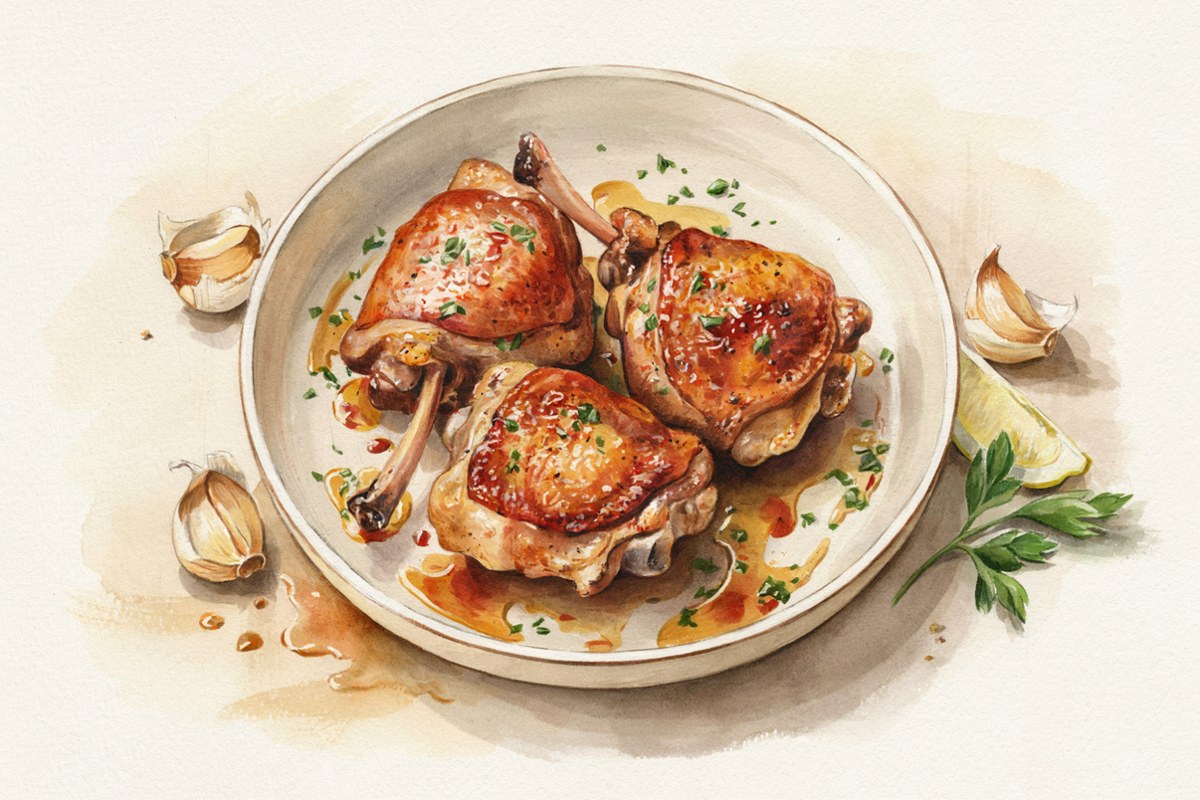
Garlic-Anchovy Chicken Thighs
capers, lemon & parsley
Boneless thighs seared in an anchovy-melted oil, roasted through, then turned in a bright garlic-and-lemon pan glaze. Deeply savory, forgiving, and mostly hands-off once the oven takes over.

Ingredients
Before you start
Get these into the state the recipe asks for first — the steps that use them won't wait.
- Garlic smashed and minced, lemons juiced, parsley chopped, capers drained, and the anchovies within reach — before the chicken goes in — the aromatic base and the final glaze both come together fast; garlic scorches and lemon boils off if you're still prepping
- An instant-read thermometer out on the counter — thighs want 175°F, not the 165°F you'd guess — the number is the whole doneness call, so have it ready
Method
Cook's notes
What anchovies to buy — and why they're not fishy. Oil-packed anchovy fillets in a jar or tin are the standard (Ortiz and Cento are widely stocked, in the canned-fish aisle); a tube of anchovy paste (Cento or similar) is the low-waste, keeps-for-months option and melts in just the same — about 1 tsp paste per 2 fillets. Melted into hot oil they lose all fishiness and leave only savory depth. Keep leftovers in the fridge — fillets submerged under their oil, or just recap the tube.
On doneness: boneless skinless thighs are dark meat, so they're best pulled at 175°F (even up to about 185°F stays juicy), not the 165°F you'd use for breast — the connective tissue melts and they turn silky rather than rubbery. See pull it early, let it rest.
Why the minced garlic waits until the end: minced garlic burns fast — cooked in the searing oil or left under the thighs in the oven it would scorch and turn bitter, so it goes in only at the finish, where it keeps its fresh, pungent bite. The smashed cloves and capers take the early, mellow treatment (then get reserved so they don't scorch either), and the anchovies — which melt rather than burn — season the searing oil in between.
An even mellower version: instead of reserving, leave the smashed cloves in the pan through the sear and the oven — at 350°F they confit to soft and sweet. Fish them out or mash them into the glaze at the end. You trade a little sharp-garlic punch for a round, roasted sweetness.
Want more of an actual sauce? As written this is a bright, glaze-y coating rather than a pool. For a proper pan sauce, add a splash (about ¼ cup) of dry white wine or chicken stock along with the lemon and simmer a minute before the butter.
Serve over mashed potatoes, buttered orzo, rice, or with crusty bread to mop the pan. It's a darker, hands-off cousin of Chicken Piccata — same lemon-and-caper family. New to cooking thighs? Start with Chicken Thighs, Any Way.
Easier, if you like
- Anchovy paste in a tube (Cento, canned-fish aisle) means no tin to open and no leftovers to store — squeeze in about 2 tsp where the fillets go.
- Frozen crushed garlic (a Dorot cube, freezer aisle — one cube ≈ one clove) drops straight into the pan for the garlic step with no cutting board (why frozen, not jarred).
- Bottled lemon juice is fine in the pan on a busy night (about 5 tbsp); save one fresh wedge for the squeeze at the end, where it matters most.
Gluten-free as written; easily dairy-free
Dairy-free: it already is unless you add the optional finishing butter — leave it out (the olive-oil glaze is lovely on its own) or gloss with a drizzle of good olive oil instead.
No anchovies? A teaspoon of fish sauce or a spoonful of white miso gives a similar savory backbone — not identical, but the same deep note.