 Spare Spoons Kitchen
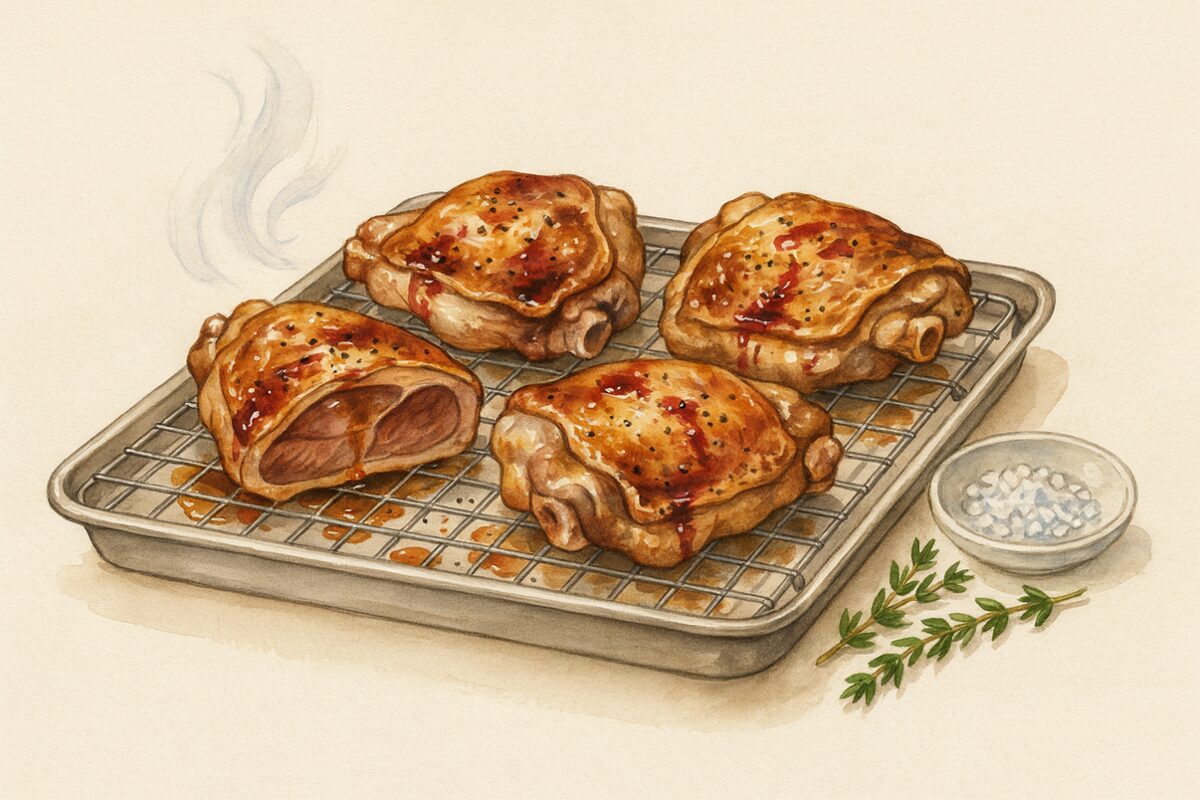
Chicken Thighs,
Any Way
The most forgiving piece of the chicken — roasted, grilled, or seared in a skillet. Crisp skin, juicy meat, and the one number that matters: 175°F, not 165.

Ingredients
Before you start
Get these into the state the recipe asks for first — the steps that use them won't wait.
- Skin-on thighs only: salted and left uncovered on a rack in the fridge, ideally the night before — optional, and it buys exactly one thing: crisp skin. You can't dry a wet skin at dinnertime, so if it's already evening the decision is made for you; salt them and carry on. Skip it entirely for boneless, skinless
Method
Cook's notes
Why 175°F and not 165°F. 165°F is the safety line, and for a breast it's also the pull point. A thigh is different meat: it's laced with connective tissue that only turns tender around 175°F, and it carries enough fat to stay juicy getting there. A thigh at 165°F is safe but chewy. More in Kitchen Notes.
The dry-brine is optional — the salt isn't. Salt them either way; that's the seasoning. The overnight buys one thing, crisp skin. Worth it for skin-on, pointless for boneless skinless.
Marinating? Leave the salt out. A marinade already carries it — the chicken thigh marinade has enough soy and salt to season 1.1 kg on its own. Salt again on top and you've doubled it. Marinating replaces step one rather than following it, and its sugar browns faster, so check them 10 minutes early.
Bone-in and skin-on if you have the choice — the skin bastes the meat and becomes the best part. Boneless skinless is faster and works in every method here; expect a good piece of chicken rather than a great one.
Use a thermometer. Thighs run from 110 g to 200 g in the same package, so the clock can't know. ("Until the juices run clear" is folklore — juice colour tracks myoglobin, not temperature.) Probe the thickest part, clear of the bone. The Tool Kit has picks.
Cook eight instead of four. Same oven, same 45 minutes, and cold roast thigh is the best thing in the fridge all week — shredded into a salad, a bowl of rice, or chicken spaghetti.
Where else thighs go: skewered, they're kebabs with smashed potatoes and tzatziki; simmered in sauce, cacciatore.
Cook's notes
175°F, not 165°F. That's the one thing. Thighs are dark meat — they need the extra degrees to go tender, and they have the fat to survive it. A thermometer makes this foolproof; without one, 25 minutes at 425°F is very hard to get wrong.
Foil the pan. Chicken fat at 425°F welds itself to bare metal. Foil means cleanup is throwing something away.
Want more? The full recipe adds crisp skin, a grill method, and a skillet method — but this version is dinner, and it's a good dinner.
Easier, if you like
- Buy boneless, skinless thighs. They're trimmed, they cook in 20–25 minutes instead of 45, and there's no bone to navigate on the plate. You give up the crisp skin — that's the trade, and on a Tuesday it's usually the right one.
- Skip the dry-brine. It's optional — it costs you some crisp skin and nothing else, and if you bought boneless skinless it costs you nothing at all. Salt them and go straight to the heat.
- Line the sheet pan with foil under the rack. Rendered chicken fat at 425°F welds itself to a bare pan; foil means the cleanup is throwing something away.
Naturally gluten-free and dairy-free
Gluten-free / dairy-free: chicken, salt, pepper and oil — naturally both, in every method here.
Chicken drumsticks: same meat, same 175°F target, same methods. They're a little thicker, so add about 5 minutes in the oven and go by the thermometer.
Chicken breasts: use a different target — boneless breast is best pulled at 145–150°F and rested, not taken to 175°F, or it turns dry and stringy. Everything about this page is specific to dark meat; see Kitchen Notes for the breast method.