 Spare Spoons Kitchen
Chicken
Brine
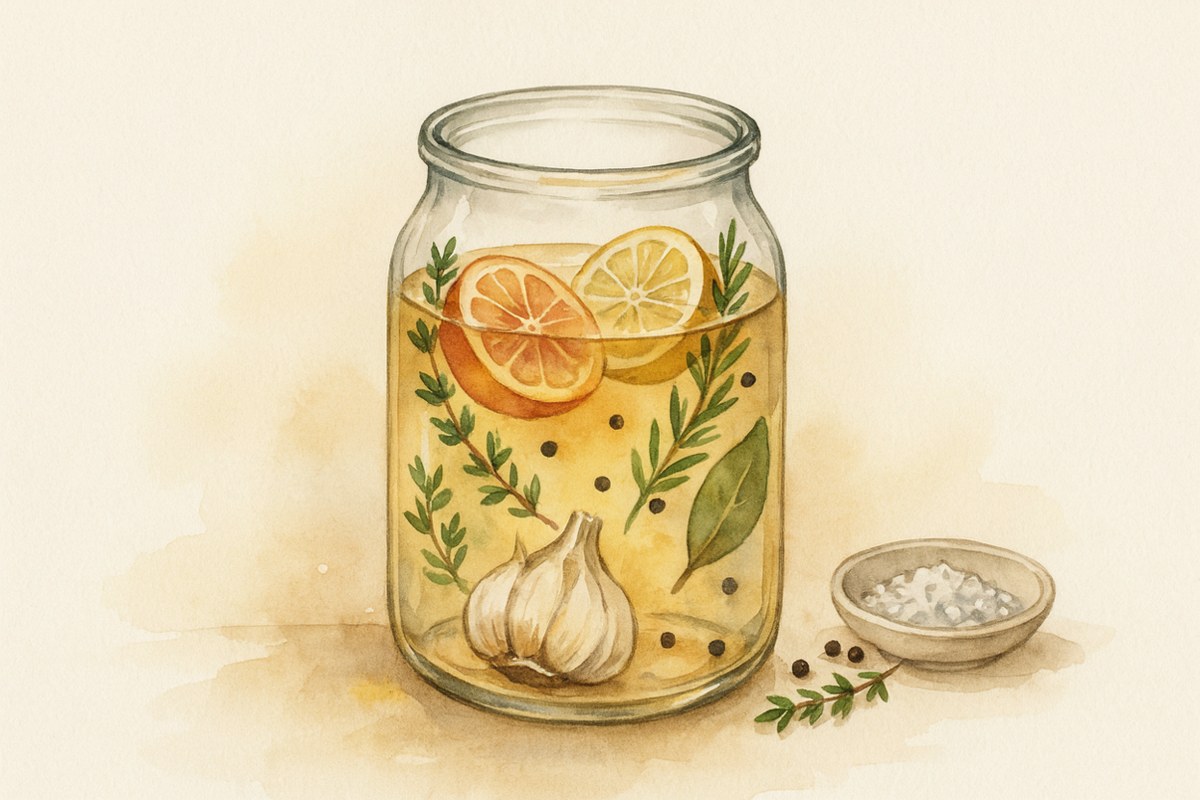
A simple wet brine for a juicier, better-seasoned bird — about 5% salt by the weight of the water, dissolved with whatever aromatics you like. Weigh the salt, cool it completely, then let the chicken soak. Naturally gluten-free.

Ingredients
Method
Cook's notes
Measuring the salt. This is about 5% salt by the weight of the water — roughly 12–13 g per cup, which is why grams are the honest way to scale it. If you'd rather scoop: per 12 cups of water that's about 1 cup plus 2 tbsp Diamond Crystal, or a scant ⅔ cup Morton kosher. Weighing is far more reliable, because kosher salts vary a lot by brand; and if plain table salt is all you have, use roughly a third less by volume (it's denser).
Flavor direction — citrus & herb. The classic for roast chicken: a halved lemon and orange (or wide strips of their peel, no pith), garlic, thyme, and rosemary, with a few peppercorns. Bright and fragrant.
Flavor direction — savory & aromatic. Onion, garlic, bay, peppercorns, plus a little sage and thyme — the roast-turkey direction, and lovely on chicken too.
Flavor direction — warm & spiced. Bay, coriander seed, a cinnamon stick, a star anise, and a few allspice berries with the black pepper — especially good before grilling or frying.
Flavor direction — sweet & savory. Swap the sugar for honey, maple syrup, or brown sugar, and add a splash of soy sauce (or tamari) for umami and deeper browning. Good with a little garlic and ginger.
Flavor direction — with a kick. Add a dried chile or a spoonful of red pepper flakes along with garlic and a bay leaf; a little brown sugar balances the heat.
Win back the crisp skin. The one thing brining can cost you is crackly skin, because you've added moisture. Get it back by patting the bird bone-dry and letting it air-dry uncovered in the fridge before it cooks — an hour helps, overnight is better.
Timing, by cut. Whole chicken 8–12 hr; bone-in parts 1–4 hr; boneless breasts 30–60 min; a whole turkey 12–24 hr (scale the brine up to cover it). A more concentrated brine works faster; when in doubt, under-brine rather than over.
Go easy on salt afterward. The bird is seasoned from the inside now, so hold back when you cook it — and taste the pan juices before you salt a gravy.
Easier, if you like
- Short on time or fridge space? Dry-brine instead. Rub the chicken all over with about ½ tsp fine salt (or 1 tsp Diamond Crystal) per pound, set it uncovered in the fridge overnight, and skip the water entirely — no big container, and it gives even crisper skin. A wet brine buys juiciness and a route for aromatics; a dry brine buys convenience and crackle.
- Cold-mix shortcut. For a plain salt-and-sugar brine you can skip the stovetop and just stir everything into cold water until it dissolves — heating only speeds things up and helps pull flavor from aromatics.
- No container big enough? A clean food-safe bucket, a stockpot, or a brine bag set in a bowl all work; for parts, a large zip-top bag is easiest.
Naturally gluten-free & dairy-free
Gluten-free: the brine is naturally gluten-free — if you go the sweet-savory route with soy sauce, use tamari.
Turkey: scale to 24+ cups to cover the bird and brine 12–24 hours.
Pork (chops, loin, tenderloin) takes this same brine beautifully — 1–8 hours depending on thickness.