 Spare Spoons Kitchen
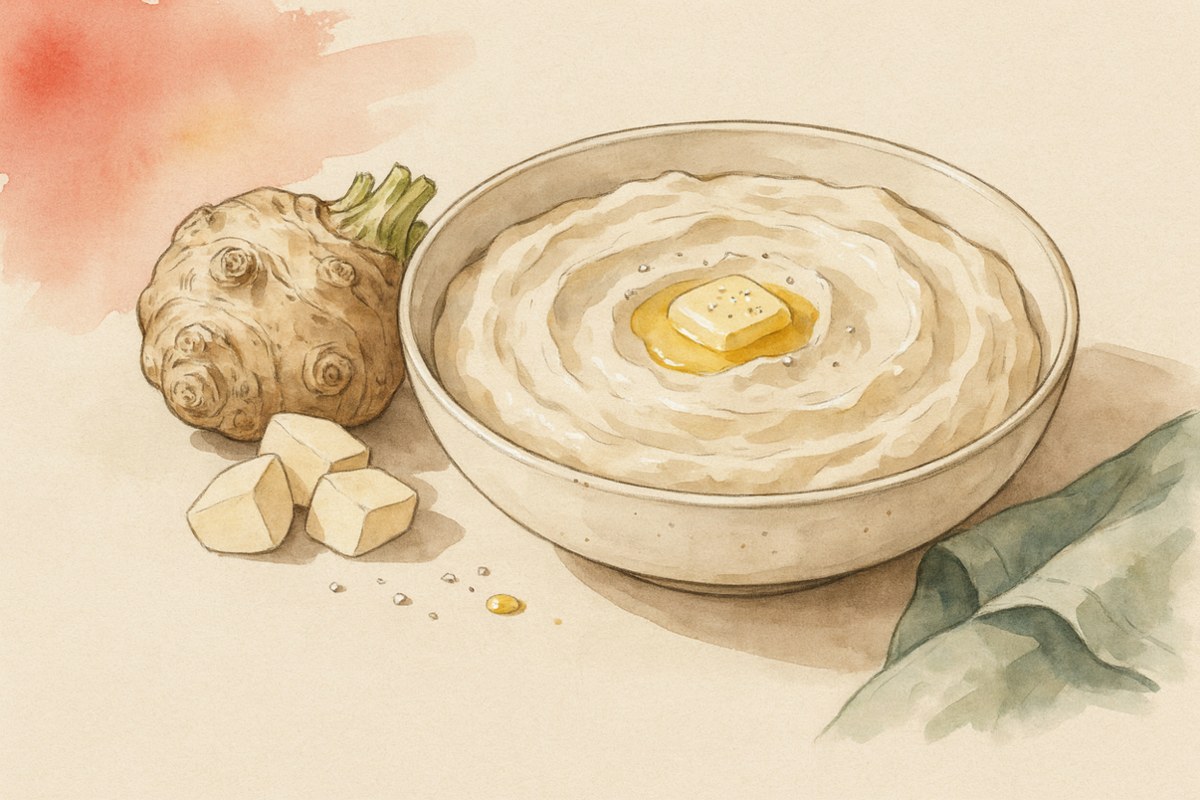
Celery Root Purée
The ugliest vegetable in the produce section cooked in milk and blended smooth — nutty, faintly celery-sweet, and lighter on the plate than mashed potatoes.

Ingredients
Before you start
Get these into the state the recipe asks for first — the steps that use them won't wait.
- Celery root peeled with a knife and cut into even chunks — the skin is too gnarled for a peeler, and uneven chunks cook unevenly
Method
Cook's notes
Buy it heavy for its size and avoid bulbs that feel spongy or sound hollow when tapped — those are woody in the middle. A bulb loses a fair amount of weight to peeling, which is why the ingredient list starts from the untrimmed weight.
It browns fast. Cut chunks go beige within minutes. Drop them into the milk as you go, or into a bowl of water with a squeeze of lemon if you are working ahead.
The potato is structural, not filler. Celery root alone blends slightly loose and watery; one potato gives it enough starch to hold a shape on the plate. Do not add more — too much potato and the blender turns it to wallpaper paste.
Blender, not food processor. A processor leaves it grainy. If you only have a processor, run it long and then push the purée through a sieve.
What to serve it under: brown-butter scallops, roast chicken, duck, pork, or short ribs — anything with a sauce worth catching. Related beds: white bean purée, cauliflower purée, pea purée.
Make ahead: keeps 3 days in the fridge and reheats well over low heat with a splash of milk, stirring. It freezes better than mashed potatoes do.
Easier, if you like
- Buy it pre-cut — some produce departments and Trader Joe's carry peeled, diced celery root in the refrigerated vegetable case, which removes the whole peeling job.
- Skip the potato and use a little less milk. The purée will be looser and more of a sauce than a bed, which is fine under fish.
Vegetarian and gluten-free; vegan with two swaps
Vegan / dairy-free: simmer in unsweetened oat milk — Oatly Original, in the refrigerated case, is the closest to whole milk here — and blend in olive oil or a plant butter instead of the butter.
Gluten-free: naturally gluten-free.
Richer version: replace some of the milk with cream, or blend in a spoon of crème fraîche at the end.
No celery root? Parsnip works the same way and is sweeter; a mix of parsnip and potato is a good winter substitute.