 Spare Spoons Kitchen
Buttermilk
Sandwich Bread
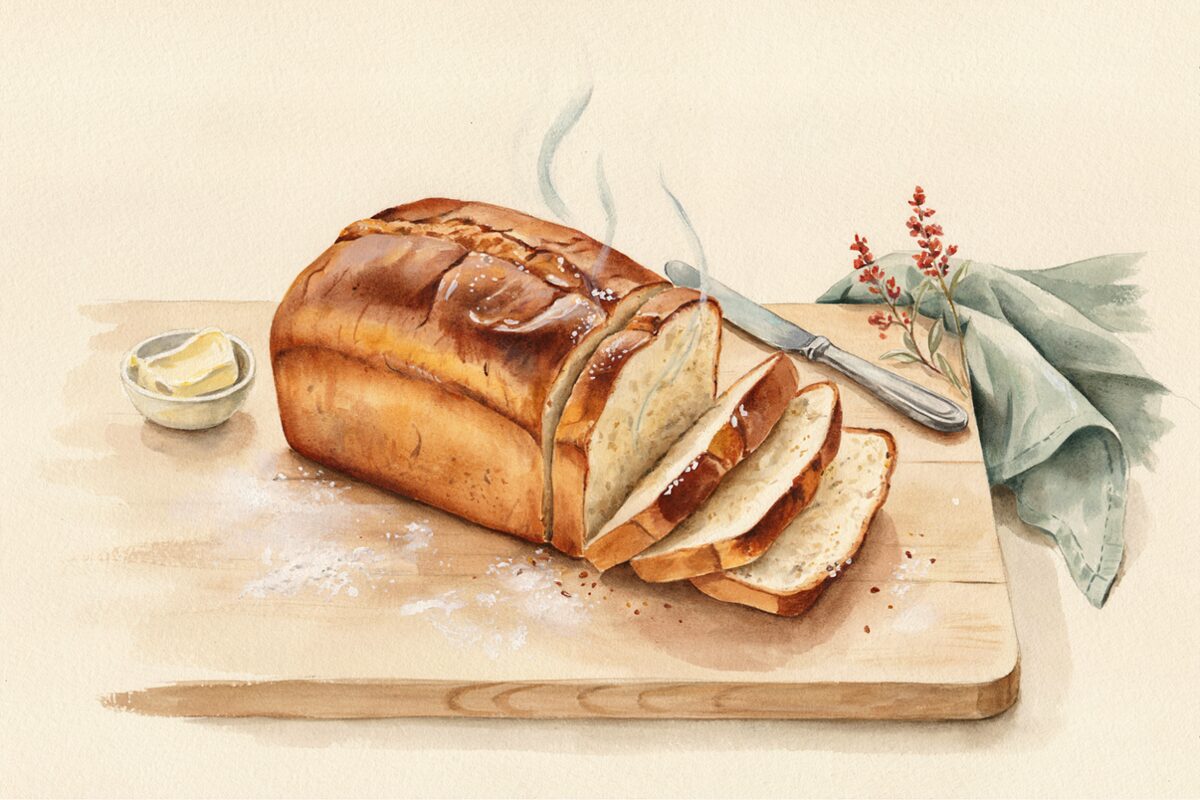
A soft, tender-crumbed sandwich loaf made the no-knead way — buttermilk does the tenderizing, the fridge does the work, and you bake it any day that week. Makes one loaf; tap 2× to double.

Ingredients
Method
Cook's notes
Provenance: adapted from the Buttermilk Bread in The New Artisan Bread in Five Minutes a Day by Jeff Hertzberg and Zoë François. The stored no-knead master-dough method is theirs; this version is rewritten in our own words, with gram weights and doneness by temperature. (That book link is an affiliate link — as an Amazon Associate we earn from qualifying purchases, at no extra cost to you.)
One loaf now, or double it. The recipe makes a single loaf and the dough fits a 4-quart dough bucket — right for one person or a small fridge, and it's still make-ahead: mix it, and bake any day over the next 5 days. Want two loaves? Tap + on the loaves counter to double everything; the bigger batch climbs to about 3 quarts as it rises, so give it a 6-quart, or just mix two 4-quarts. (Affiliate link — as an Amazon Associate we earn from qualifying purchases, at no extra cost to you.)
Make-ahead is the point. Mix the dough, let it rise and go into the fridge, and bake on whichever of the next 5 days you have the energy for — the crumb is best in the first 2–3 days. Cold dough is also far easier to shape than warm.
Why buttermilk. Its acidity tenderizes the gluten, so the crumb comes out soft and close — the classic American sandwich loaf. No buttermilk? Stir 1 tbsp lemon juice or white vinegar into a scant cup of milk and let it sit 5 minutes; it curdles slightly and does the same job.
Have a sourdough starter? Flip the Sourdough toggle above the ingredients — it folds in 100 g of starter and trims the flour and water to match, at any size, for sourdough tang layered on the buttermilk's. It keeps the packaged yeast on purpose: this enriched, sugary dough ferments sluggishly on wild yeast alone, so full no-yeast sourdough isn't the move here — the starter is for flavor.
Rises and falls — wait for the fall. Unlike most bread, this dough tells you it's ready by collapsing: it puffs up, then the top flattens or sinks. Refrigerating before that first full rise-and-fall can leave it flat later, so don't rush it into the fridge.
Weigh the flour if you possibly can. A scooped cup of flour can pack 20% heavy, and in a wet dough that's the difference between soft and bricky. If you're measuring by volume, spoon the flour into the cup and level it — don't scoop. (Why we weigh in grams.)
All-purpose is right here; bread flour makes a chewier, taller loaf if that's what you're after (add a splash more water, as it drinks more). This dough also makes an excellent cinnamon-raisin loaf — roll a shaped piece flat, scatter with cinnamon sugar and raisins, roll up, and bake as usual.
Easier, if you like
- The fridge is the shortcut. Mix the batch on a quiet evening; from then on, fresh bread is 90 minutes of rising and 45 of baking, almost all of it unattended. No same-day mixing, no kneading.
- Doubling? Bake both at once. If you tapped + for two loaves, the oven's already hot and the dough's already made — bake both together and freeze one, sliced, for toast.
Vegetarian; easy to make dairy-free
Dairy-free: use the milk-and-lemon soured plant-milk trick (1 tbsp lemon juice into a scant cup of soy or oat milk) in place of buttermilk, and brush the top with oil or plant butter instead of dairy butter.
Vegan: the same dairy-free swaps make it vegan — everything else (flour, water, yeast, salt, sugar) already is.
Gluten-free: this is a gluten-developed wheat dough and doesn't convert cleanly to a 1:1 gluten-free flour — better to reach for a recipe built for GF bread than to substitute here.