 Spare Spoons Kitchen
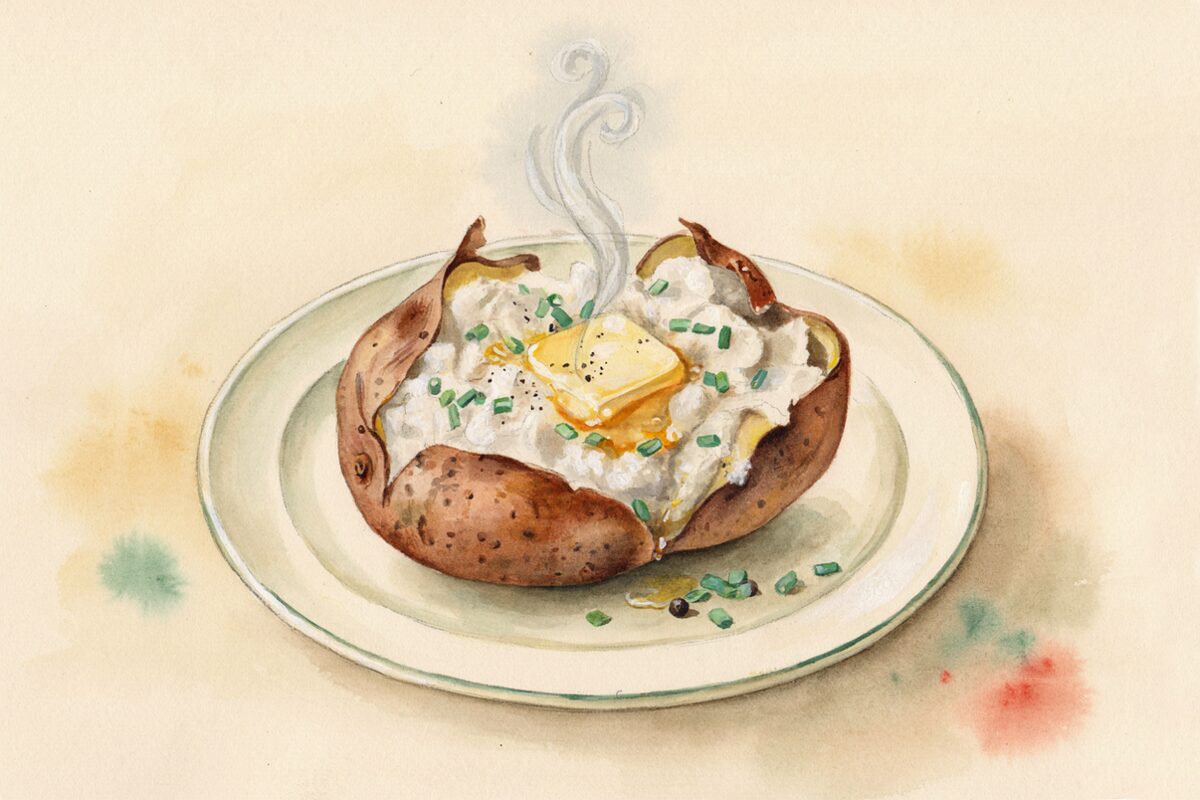
Perfect Baked Potato
A crackly-skinned, fluffy baked potato — three ways (oven, air fryer, or microwave), all finished at the temperature where the inside turns truly light and fluffy.

Ingredients
Method
Cook's notes
Russets are the potato to use. Their high starch and low moisture are exactly what fluff up light and dry inside — the floury end of the potato spectrum. Yukon Golds bake up creamier and denser (good, just different); waxy red potatoes won't fluff at all.
Why no foil. Wrapping in foil steams the potato in its own moisture, giving a soft, pale, almost boiled skin. Baking it bare lets the skin dry and crisp. If you've only ever had foil-wrapped baked potatoes, this is the upgrade.
The temperature is the tell. Baking time depends on size and your oven, so a thermometer beats the clock: 205–210°F is the sweet spot, where a fork meets no resistance. See the Tool Kit for a good instant-read.
Make it a loaded baked potato: split it and pile on cheddar, sour cream, crisp bacon, and chives — or steamed broccoli and melted cheddar for a broccoli-cheddar potato that's a light meal on its own.
Perfect alongside a steak. This is the classic steakhouse plate — start the potatoes first (they take the longest), then cook a reverse-seared ribeye while they finish.
Leftovers → twice-baked: scoop the flesh, mash it with butter, sour cream, and cheese, pile it back into the skins, and bake at 190°C / 375°F until hot and golden.
Cooking for a crowd? The oven fits as many potatoes as you can space out on the rack, all at once, with no extra effort.
Easier, if you like
- In a hurry? The microwave method gets you a hot, fluffy potato in about 10 minutes — the only thing you give up is the crackly skin, and the optional broiler step brings most of it back.
Naturally gluten-free; easy to make it vegan
Gluten-free: the potato is naturally gluten-free — just keep the toppings GF.
Vegan: skip the butter and dairy toppings; a drizzle of olive oil, flaky salt, and chives — or a spoon of plant butter — is lovely. The potato and its skin are already vegan.